
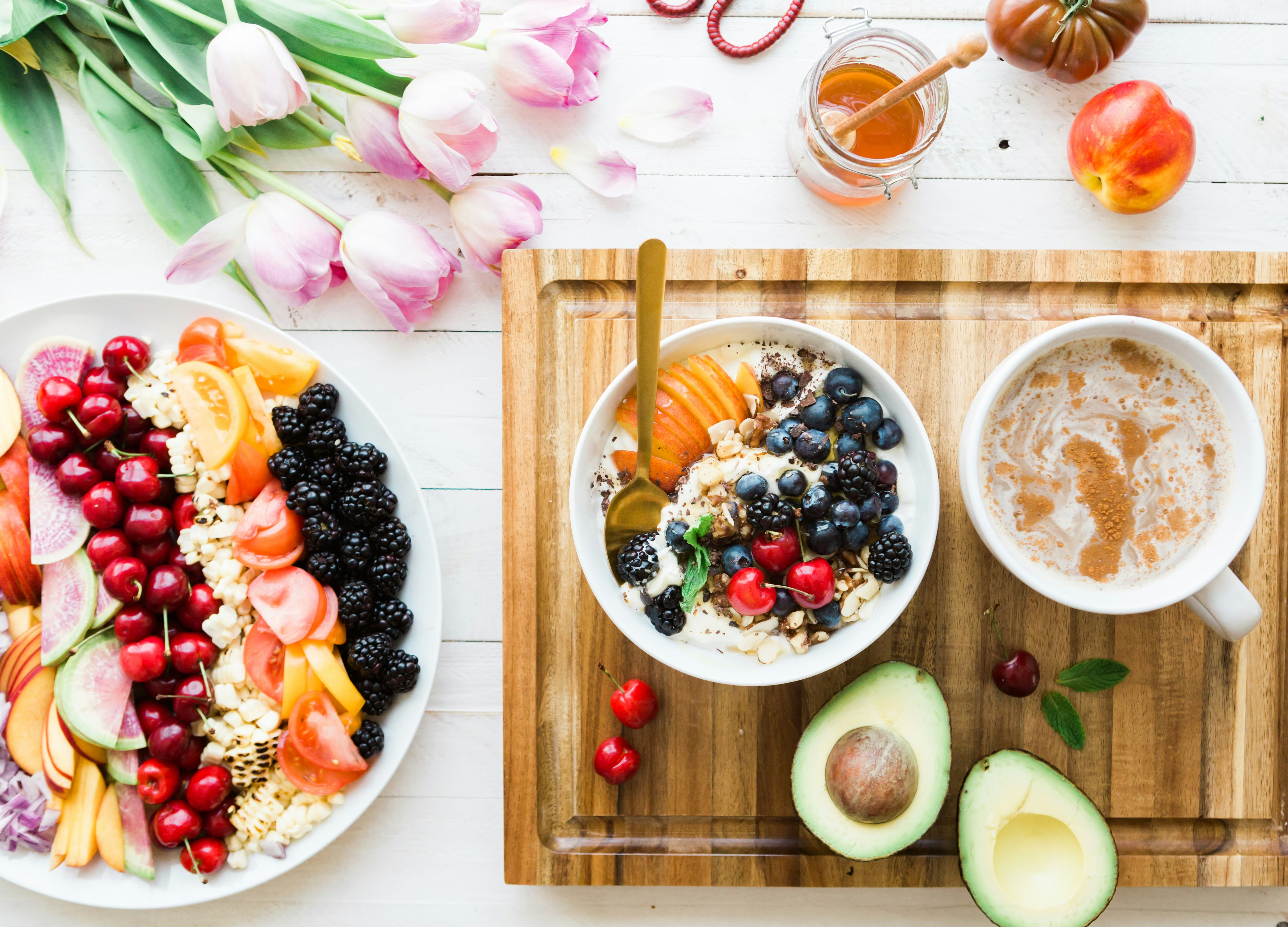
A breakfast of fresh orange juice, brown bread, oats, banana and honey may seem like the perfect healthy start to the day. But could some of these seemingly nutritious choices be contributing to blood sugar spikes? In an interview with HT Lifestyle, Dr Gagandeep Singh, Specialist in Metabolic Medicine and Diabetes Reversal, explains why the way we understand ‘healthy eating’ may need a rethink, and which everyday foods could be quietly affecting blood sugar levels. (Also read: Knee pain in your 20s and 30s without an injury? Orthopaedic doctor explains common causes and everyday triggers )
“A patient once read out her breakfast to me like a confession she was proud of. A glass of fresh orange juice, two slices of brown bread, a big bowl of oats with a sliced banana, a spoon of honey in place of sugar. Then she asked why her fasting sugar kept rising anyway. He adds, “The trouble with ‘healthy eating’ is that most of us are working from a definition written decades ago, one that feared fat and forgave sugar as long as it arrived in a wholesome-looking package. The body does not read packaging. It reads glucose. “Take fruit juice. Squeeze an orange into a glass and you have thrown away the fibre that once slowed its sugar down, and what remains hits the blood almost like a soft drink. Eat the orange whole and the story changes. The same logic undoes the morning smoothie and the banana-heavy bowl,” Dr Singh explained. The key difference is fibre. Whole fruits take longer to eat and digest, while juicing removes much of the fibre and makes it easier to consume a larger amount of fruit sugar at once. “Then there is bread that calls itself brown or multigrain. It is still flour, still ground fine, and it lifts blood sugar much like the white loaf it replaced. Oats, poha, upma, cornflakes, all of them eaten on their own are quick carbohydrates wearing a health halo. This does not mean these foods need to be completely eliminated from the diet. Rather, portion size and what they are paired with matter. Adding protein, vegetables and healthy fats can make a carbohydrate-heavy meal more balanced. “We also tell ourselves that natural sugar is safe sugar. He also cautioned against automatically choosing low-fat products in the belief that they are healthier. “Here is the reframe. Fat was never the villain. Desi ghee, butter, paneer, eggs and olive oil blunt a sugar rise rather than cause it. The real disruptors are the refined, quick-digesting carbohydrates , even the ones dressed up as virtuous,” Dr Singh explained. Rather than focusing only on removing fat, he recommends paying closer attention to refined and rapidly digested carbohydrates and how meals are composed. He concluded with the story of his patient: “My patient changed almost nothing about how hard she was trying. She changed what she trusted. Her breakfast grew simpler, her sugar came down, and she stopped being punished for eating well. He completed his MBBS from University College of Medical Sciences, Delhi. Note to readers: This article is for informational purposes only and not a substitute for professional medical advice. Always seek the advice of your doctor with any questions about a medical condition.
Dr Gagandeep Singh , Founder of Redial Clinic, New Delhi, is a Specialist in Metabolic Medicine and Diabetes Reversal with 13 years of experience. Because when the fat comes out, sugar and starch go in to rescue the taste, “And the low-fat products lining the shelves are often worse than what they replaced,.
Textbook healthy, she said. The answer was sitting in that breakfast ,” said Dr Singh. They spike you and leave you hungry an hour later,” he said. Jaggery, honey and dates feel earthy and traditional, but the body treats them as exactly what they are,” Dr Singh said. “So eat your fruit whole, let protein and vegetables lead every plate, keep the honest fat, and treat ‘healthy carbs’ as a small guest rather than the host,” Dr Singh advised.
