
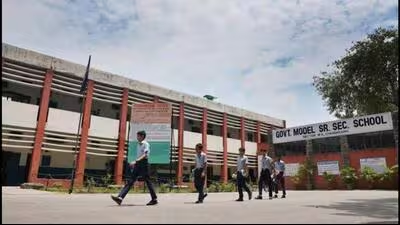
Two years after Chandigarh’s government schools recorded relatively low learning outcomes in the 2024 PARAKH assessment, the UT education department is shifting its focus to early intervention, with regular assessments planned to identify students struggling academically and give schools time to improve their performance before the next national-level exercise.
PARAKH, which stands for Performance Assessment, Review and Analysis of Knowledge for Holistic Development, is a national assessment initiative of the government of India. It evaluates students’ learning competencies and provides an indication of how well they have understood concepts taught in school, rather than merely testing their ability to memorise information.
“This is to identify those students who are relatively weak so that special efforts can be made to improve the learning outcomes,” said Nitish Singla, director, school education.
The 2024 assessment results provided the Chandigarh education department with an indication of the learning gaps among students in government schools. As part of the initiative, the department has issued guidelines for three rounds of assessments for Class 8 students during the 2026-27 academic session. The first assessment is scheduled for November 3, followed by the second on December 9 and the third on January 20, 2027.
With the next assessment approaching, the department is now looking to give schools sufficient time to work on these shortcomings. The idea is to identify students who need additional help at an early stage, monitor their progress and strengthen their understanding through focused teaching. The initiative will cover government schools across Chandigarh, including those in peripheral areas, where addressing learning gaps can be a particular challenge. Regular assessments are expected to help teachers understand whether students are keeping pace with their curriculum and which subjects or concepts require greater attention. The department has also directed school heads to prepare academic improvement plans based on the assessment findings, monitor students’ progress and maintain records of learning gaps and remedial activities.
