
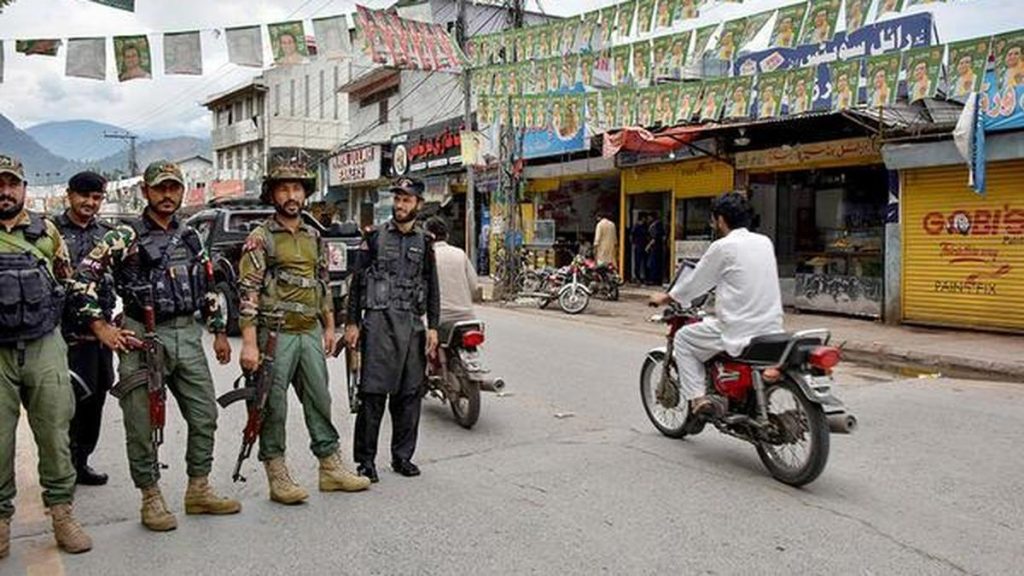
In 2006, while conducting fieldwork in Muzaffarabad in the aftermath of the devastating earthquake, I stayed with a local family after driving from Islamabad via Abbottabad, through a landscape of shattered houses and tent settlements. One morning, among the volunteers, I noticed a middle-aged man moving slowly on crutches. We eventually sat down together over tea, and I learnt that he had been attacked by activists associated with a rival student movement that would later become central to my understanding of the politics of Pakistan-Occupied Kashmir (PoK).
The 12 refugee constituencies remain a particularly contentious feature of the electoral system and of the current agitation. Reserved for people who migrated from the Indian side of Jammu and Kashmir in 1947 and now live elsewhere in Pakistan, these seats, six for Jammu and six for the Kashmir Valley, give voters outside PoK a significant role in determining its government. In 2026, PML-N won 10 refugee seats, while PPP secured 2 seats overall in the currently declared results. Given that the 12 refugee seats constitute nearly 26% of the 45-member elected seats in the Assembly, their political weight is disproportionate to their direct connection with the territory they help govern.
The election also produced a striking generational and political turnover: three former Prime Ministers, including Sardar Attique Ahmed Khan, who heads the regional party with a long history, the All Jammu and Kashmir Muslim Conference, were defeated, underscoring the extent to which established political figures and traditional parties have lost their electoral hold. Several pioneers of the movement later entered mainstream politics. Ironically, his son, Faisal Mumtaz Rathore, is now presiding over a government as outgoing Prime Minister confronting protests that have resulted in dozens of deaths. This highlights both the historical continuity and the contradictions within PAJK’s political elite. This contrasted sharply with the position of Sheikh Abdullah’s National Conference, which had rejected the Muslim League’s politics and was politically aligned with the Congress. The limited participation in these constituencies further exposed the anomaly: legislators elected by small and geographically dispersed electorates, many of whom live hundreds of kilometres outside PoK, can nevertheless exercise the same legislative power as representatives elected by tens of thousands of voters actually living in the territory. This is precisely the democratic contradiction at the heart of the protesters’ objection and not the representation of refugees as such, but the continued use of a non-territorial electoral arrangement to determine the government of a territory whose residents themselves have no say in those constituencies. The fact that the determining composition of the Assembly remains dependent on refugee constituencies only reinforces the broader perception of an electoral system whose institutional design is part of the political grievances being expressed within PoK itself. The recent protests also offer broader lessons that extend well beyond Pakistan-Occupied Jammu and Kashmir. Across many post-colonial states and developing countries, the political and administrative periphery is often viewed primarily through a security lens rather than as a source of political knowledge and lived experience. The knowledge systems that evolve within peripheral societies deserve greater recognition and accommodation in policymaking. Capitals inevitably become centres of political and bureaucratic power, but they can also develop insulated narratives that overlook the complexities of the regions they govern. This disconnect often delays policy correction and deepens mistrust.
One notable example was Mumtaz Hussain Rathore, who eventually became Prime Minister of PAJK in 1990. Across the three phases of the election, the ruling PML-N has emerged as the largest beneficiary, securing at least 25 of the 38 seats for which results have so far been announced, much as the party in power in Islamabad has historically tended to perform well in PoK elections. The contrast with 2021 is instructive. Then, the ruling PTI won 26 of the 45 general seats, followed by PPP with 11 and PML-N with six. The third phase, held in Bagh and Haveli, however, has also underscored the unsettled and contested nature of the 2026 process. PPP won LA-17 Bagh-IV, while an independent candidate captured LA-14 Bagh-I; the results in LA-15 and LA-16 remain unresolved, with the Election Commission ordering re-polling at 23 polling stations on August 15. On 19 July 1947, the All Jammu and Kashmir Muslim Conference passed a resolution in Srinagar advocating the State’s accession to Pakistan. The 2026 election has merely reinforced the protesters’ assertion that retaining these seats in their present form is a negation of democratic representation. The disconnect was particularly visible during the polling for the refugee constituencies on August 2. Although these 12 seats together had nearly 439,000 registered voters, their electorates are scattered across Pakistan, with some individual constituencies representing only a few thousand voters. In LA-43 (Valley-IV), for instance, there were just 3,346 registered voters, while LA-44 (Valley-V), covering refugees in Rawalpindi and Islamabad, had 3,754. LA-39 (Jammu-VI), the largest of these constituencies, had only 20,807 registered voters.
Because of the ongoing protests, seven further constituencies in Poonch and Sudhnoti have also been postponed. As a result, policies are frequently framed in distant capitals with limited appreciation of local realities.
The immediate trigger for this latest round of violence appears to have been the killing in June of Shahzeb Habib, a JAAC activist who was travelling with the organisation’s core leader Umar Nazir Kashmiri. Their vehicle was intercepted near Barmang Bridge in Rawalakot, after which an exchange of fire took place. The episode illustrates, once again, the limits and ultimately the failure of relying on coercive tactics to suppress political dissent. The federation’s history is marked by repeated confrontation with the authorities. The state responded with arrests under sedition charges. Several activists were imprisoned for extended periods; Mirpur-born Sabir Ansari, for instance, reportedly spent more than a year in jail. Provisions ordinarily invoked against enemy agents were applied to student activists, reflecting the degree to which the state viewed organised nationalist politics as a security challenge. Now his son Sabar Ansari is now one of the leaders of the current agitation and reports confirm that his family has again faced the crackdown in Mirpur.
One of its earliest major agitations occurred in 1967, when students protested against PoK President Abdul Hameed Khan during his proposed visit to the Mirpur College convocation.
JAAC supporters disputed the account and alleged that Habib was killed by security-force fire and that Kashmiri was also wounded While authorities said armed occupants opened fire first.
