
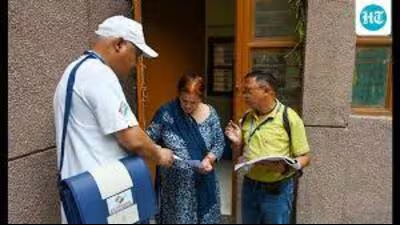
The UT’s draft electoral roll, published on Tuesday following the Special Intensive Revision (SIR) enumeration phase, indicates a reduction of nearly 12.8% in the voter base.
Event Context
Match Outlook
This does not amount to a final reduction in the electorate. Officials have clarified that these names are excluded from the draft roll, not permanently deleted. The claims and objections window, open from July 21 to August 20, provides an opportunity for genuine voters to reapply and have their names reinstated. A portion of the excluded voters, particularly those marked absent, is expected to return in the final roll.
The participation rate of 87.19% in form submission is relatively high for a door-to-door verification drive.
source
According to the official report — out of 5,16,427 registered electors, only 4,50,280 (87.19%) submitted enumeration forms. As many as 66,147 voters, or 12.81%, remained unverified.
The figure effectively translates to more than one in every eight voters in Chandigarh not featuring in the draft roll. In electoral terms, such a double-digit shift is significant, particularly in a compact urban constituency where margins and turnout patterns can influence electoral outcomes.
The data shows that the reduction is not arbitrary but driven by clearly identified categories. A majority of the excluded voters — 43,725, or 66.1% — have been classified as “permanently shifted”, followed by 12,568 (19%) marked absent during verification. Another 3,535 (5.34%) were reported deceased, 2,590 (3.91%) were found to be duplicate entries, and 3,729 (5.63%) fell under other categories.
The large number of voters marked as “shifted” points to urban mobility — including relocation of students, professionals, and workers to neighbouring areas such as Mohali, Panchkula and Zirakpur — and is a major factor reshaping the city’s electoral profile.
