
New Delhi
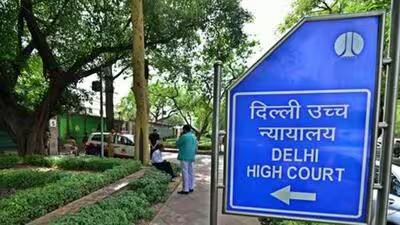
It asked additional solicitor general Chetan Sharma, appearing for the Delhi Police, whether the authorities were willing to permit the protest at an alternative venue. The Delhi High Court on Thursday took a dim view of the Delhi Police’s refusal to permit Karni Sena leader Raj Shekhawat to hold a protest at Jantar Mantar against the University Grants Commission (Promotion of Equity in Higher Education Institutions) Regulations, 2026, over apprehensions that the number of participants could exceed the permitted limit. A bench of justice Swarana Kanta Sharma observed that the police could have imposed conditions on the protesters, rather than refusing permission for the gathering on September 20. The court asked Sharma to obtain instructions on the issue by September 22, the next date of hearing. The court was hearing a petition filed by Shekhawat, whose counsel submitted that the police initially granted permission for the protest scheduled on September 20, but later withdrew it through a communication dated September 15, citing apprehensions that the number of participants could exceed the permitted limit.
Last week, the Centre informed the Supreme Court that it was reconsidering the regulations. Issued on January 13, the UGC’s equity regulations mandate the establishment of Equal Opportunity Centres and Equity Committees in universities, colleges and deemed-to-be universities to address complaints of discrimination and promote inclusion. The framework has its origins in a petition filed before the Supreme Court in August 2019, seeking stronger safeguards against discrimination in higher education.
The law officer, however, said that the decision had been taken against the backdrop of various guidelines issued by the Supreme Court and standing orders issued to regulate protests. He said that Jantar Mantar is a sensitive area and it was not only Shekhawat whose request was denied. “The amount of likes and social media dissemination is so much, the executive thinks it will overspill,” the officer said. In January, the Supreme Court stayed the operation of the regulations, observing that the framework was capable of dividing society and could have “dangerous impacts” if exploited by mischievous elements.
“You rejected it? Why? Can this kind of order be passed? How can you pass this order? They are not even proceeding from there. Put some conditions then you can allow them.
Because you are apprehending that some persons can come, just.
On the last date also I clearly said that you can put any condition and restriction on them and then you can permit them and it is only for a few hours. How can you refuse them?” the court said.
