
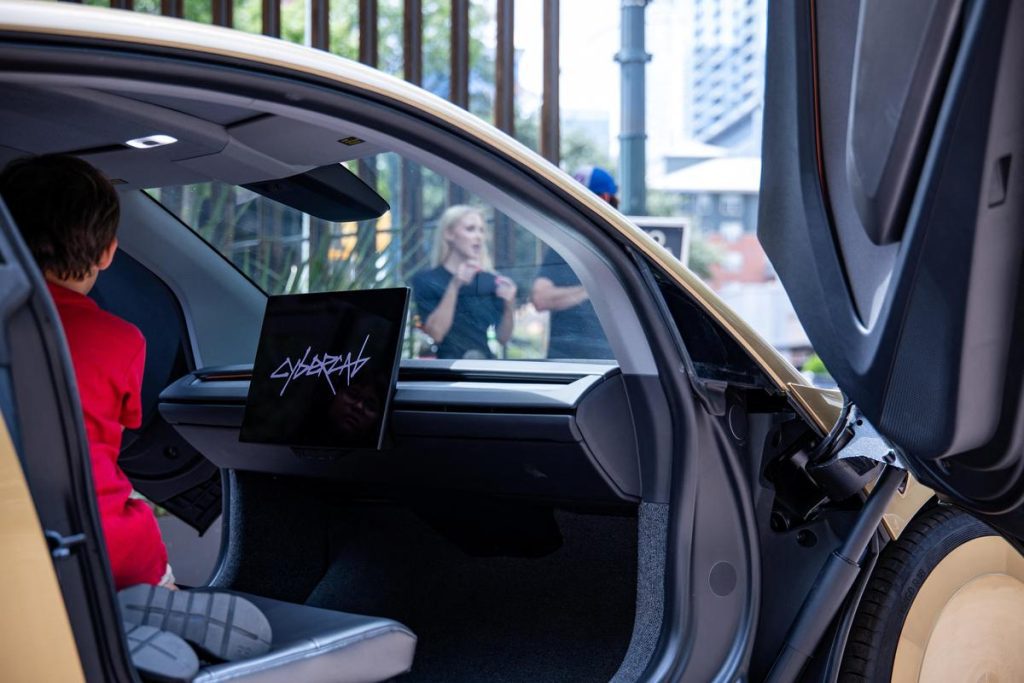
The story so far: On September 3, 2026, Tesla announced the rollout of its new electric robotaxis, offering services in designated parts of Austin, Texas. But the near-empty interior has sparked questions about the safety of passengers and their ability to intervene in case of emergencies.
The self-driving cars are almost impossible to ignore as their gold exterior and ‘Cybercab’ branding catch the eye, according to news reports.
Passengers can stop a ride by either pressing a ‘Pull Over’ button on the touchscreen or a ‘STOP’ button overhead for non-emergency situations. In the event of an emergency, users will be able to pull the door lever to trigger an emergency mechanical release. The Cybercab is designed to also pull over instead of instantly braking, based on its surroundings.
The Cybercab is a self-driving car that has seating for two people. The ‘butterfly’ doors open upwards and the body boasts a sleek, cyberpunk-inspired design that contrasts sharply with the chunkier camera-mounted cars from rival Waymo. There are no steering controls or pedals inside the Cybercabs. Mr. Musk has declared that the cars were built for “maximally efficient autonomous operation. Regulators will need to confirm if Mr. Musk’s design choices comply with their safety requirements. The NHTSA is currently evaluating the Tesla Full Self-Driving (FSD) feature that is built into over three million vehicles. The assessment is related to camera functions that have allegedly caused accidents in poor weather conditions.
The golden exterior is meant to represent a “literal” golden age of transportation, according to Tesla CEO Elon Musk. On the absence of brake pedals, he said this would help in reducing the complexity of a hydraulic system, and that “plumbing” would not have to be routed all around the car.
Cybercabs are not the first robotaxis launched by Tesla. The EV maker has already deployed its Model Y cars in Tampa and Miami, in Florida, and Austin, Dallas, and Houston, in Texas. Cybercabs are currently available in limited areas only in Austin.
Switches under the touchscreen allow users to lower the windows. A cabin camera monitors the vehicle’s interior.
