
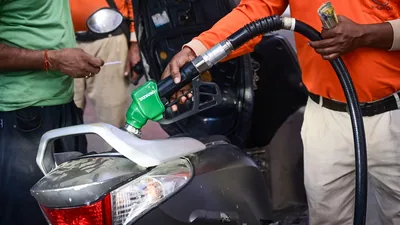
State-run oil marketing companies (OMCs) have decided that the over 93,000 petrol pumps nationwide will need to check their storage tanks and fuel dispensing nozzles for water every two to eight hours depending on shifts and weather conditions, to protect the quality of 20% ethanol-blended petrol (E20), persons aware of the matter said.
When E20 comes into contact with water, the ethanol separates from the petrol and forms a distinct water-ethanol layer at the bottom of the tank. This is called phase separation. The companies did not prescribe any particular alcohol-resistant water-finding paste for the tests.
As on April 1, 2026, the three OMCs operated 93,239 petrol pumps. IOC is the largest retailer with 42,818, followed by BPCL (25,323) and HPCL (25,098). Private companies ran 9,784 pumps, according to the latest government data. Ethanol blending in petrol rose from 14.6% in ethanol supply year (ESY) 2023-24 (November 2023-October 2024) to 19.2% in ESY 2024-25 (November 2024-October 2025), according to the Petroleum Planning and Analysis Cell, the oil ministry’s data arm. It reached 20% in November 2025-March 2026, the first five months of ESY 2025-26.
Because ethanol is highly hygroscopic: it readily absorbs water from its surroundings, experts said frequent testing with an alcohol-resistant water-finding paste is essential.
Dealers said the OMCs asked them to follow the SOP to prevent water contamination and phase separation. “Dealers often buy any alcohol-resistant water-finding paste available online for testing water ingress in E20,” one of them said.
