
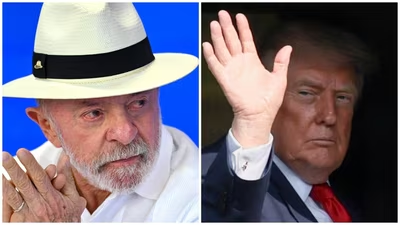
The US will begin charging 25% tariff on imports of certain goods from Brazil following an investigation alleging that the country engaged in unfair trade practices.
Market Context
The year-long inquiry “found a number of Brazil’s practices to be unreasonable and discriminatory, restricting the competitive position of American farmers, workers, innovators, and exporters,” the Office of the US Trade Representative said in a post on X late Wednesday night.
Brazil’s government denounced the tariffs and said it would take measures to insulate its economy from their effects.
“There is no justification for unilateral measures against our country,” the government said in a statement. “We will continue to diversify our trade partnerships and open new markets for our products.”
The administration proposed an additional 25% duty on imports from Brazil in a June 1 report following an investigation pursued under Section 301 of the Trade Act of 1974. The report accuses Brazil of engaging in practices that discriminate against and burden US commerce, specifically calling out its electronic payments service, known as Pix, which is used by millions of Brazilians daily.
The US report argued that Brazil has “unfairly disadvantaged” American providers of competing electronic payment services by adopting policies that favour Pix, a platform President Luiz Inácio Lula da Silva has repeatedly portrayed as a symbol of the country’s technological sovereignty and financial independence.
Brazil said the allegations related to Pix had no merit, and vowed to pursue reciprocal tariffs and relief via the World Trade Organization.
The stakes are high for both countries. The US is Brazil’s second-largest trading partner and one of the few major economies with which it runs a trade deficit.
In the June report, the administration also accused Brazil of granting preferential treatment to goods from Mexico and India and of failing to adequately enforce anti-corruption and intellectual property rules.
The dispute is also becoming an issue in Brazil’s presidential campaign. Flávio Bolsonaro, a senator and a son of the former president, is Lula’s main challenger in October’s election. The government, in its statement on Wednesday, said the Bolsonaro’s family had worked with the US government to enable the tariffs.
Company Performance
Brazil imported more than $45 billion of American goods in 2025, an 11% increase from a year earlier, while exports fell nearly 7%, with crude oil accounting for 12.5% of shipments.
Competitor Comparison
Imports of coffee, beef, and certain ethanol products would be exempt from the new duties, a senior administration official told reporters ahead of the official announcement on Wednesday. Ethanol would be subject to the new tariffs, however.
Future Forecast
Greer told Bloomberg Television in an interview earlier Wednesday that President Donald Trump was expected to “sign something” related to Brazil tariffs.
But the younger Bolsonaro told a USTR hearing that the tariffs would be difficult to reverse on the eve of the vote and could influence the political outlook.
Source
The tariffs will go into effect on July 22, according to an official.
“Today’s action is necessary to address these unfair trade practices to ensure American workers and companies can compete on a level playing field,” US Trade Representative Jamieson Greer said in a statement. “Extensive negotiations with Brazil over the past year have not resolved these issues, but we remain open to continuing negotiations with Brazil to bring about long-needed changes to the problems identified in this investigation.”
Despite the escalating dispute, both governments are still trying to avoid a broader trade conflict. Greer has met repeatedly with Brazil’s Trade Minister Márcio Elias in recent months to seek a resolution. Lula’s government intends to keep negotiating until the last possible moment but has ruled out concessions it considers politically or legally unacceptable, including changes to the Pix payment system, according to a person familiar with the talks.
Last year, Trump imposed 50% tariffs on a broad range of Brazilian goods in an effort to pressure Brazilian authorities over the prosecution of former President Jair Bolsonaro. Most of those duties were later rolled back after negotiations between Brasília and Washington, a diplomatic victory for Lula.
