
The protest came during a movement headed by the Cockroach Janata Party (CJP) targeting inefficiencies in the conduct of the NEET exam for admission to medical colleges, and seeking the resignation of the education minister.
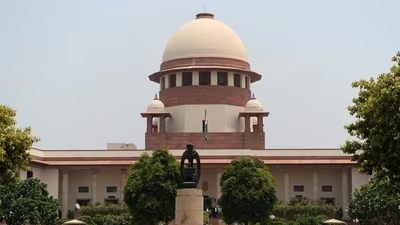
The Supreme Court on Tuesday said that “getting heard” and having a “promise of future” were the biggest assurances for the youth, as it indicated that it would on Wednesday constitute a high-powered committee to inquire into allegations of excessive police force as well as violence against police personnel during the July 20 march to Parliament.
The committee was proposed to comprise former Supreme Court and high court judges, and a retired officer of the rank of director general, with the bench indicating that it might include a former Central Bureau of Investigation (CBI) director general or a former state police chief. The panel will examine the factual aspects of the allegations and submit periodic reports to enable the court to issue further directions. The court, on its part, made clear that both sides would be examined by the proposed panel, rather than the inquiry being confined to allegations against the police. Senior counsel Gopal Sankaranarayanan, Menaka Guruswamy, Shadan Farasat, advocate Vrinda Grover, among others, also appeared for the petitioners in the matter. The court indicated that it had already obtained the consent of a former director general of CBI and a former director general of police of a state, both of whom had retired and had no connection with the matter.
The proceedings covered competing allegations arising from the July 20 student protest –– petitions alleging excessive force by police as well as pleas concerning violence against police personnel and legality of the protest.
Senior advocate N Hariharan, appearing for the petitioners, said an investigation would adequately address the allegations raised by families of injured police personnel as well as the issues raised by the Centre. Solicitor general Tushar Mehta said that the Centre and Delhi Police were not opposing the quashing of FIRs against student protesters, but maintained that persons with serious criminal antecedents who had allegedly infiltrated the protests could not be treated on the same footing.
The bench agreed that parties could either place their issues before the court or directly approach the committee. The hearing came against the backdrop of the court’s earlier finding that allegations of police excesses and violence against police personnel made out a prima facie case for an independent probe. It had earlier directed preservation of CCTV, drone, body-camera, wireless and PCR records and protection of protesters’ personal data.
