
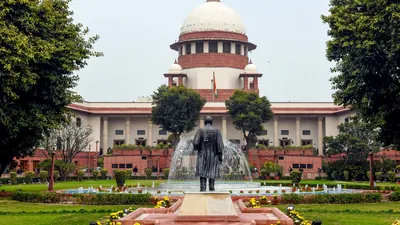
The Supreme Court on Friday expressed strong reservations about shutting schools or shifting children to online education as Delhi’s air quality deteriorated to the ‘severe’ category, saying it would rather rely on expert recommendations underpinning the Graded Response Action Plan (GRAP) than anecdotal research or independent opinions.
A bench comprising Chief Justice of India Surya Kant and justices Joymalya Bagchi and V.
Mohana said it was reluctant to impose restrictions on children attending school, stressing that physical classrooms offered a better quality of education and that the consequences of moving to online learning, including unequal access, had to be considered.
The bench further flagged the digital divide, cautioning that a blanket shift to online classes could deepen existing inequalities among children, particularly those who lack access to devices, reliable internet connectivity or an adequate learning environment at home. The court also questioned whether there was credible medical research to support claims that younger children were more vulnerable to polluted air than older students, and whether the age-based classification of schoolchildren under the pollution-control measures needed reconsideration.
“We are loathe to put restrictions on children going to school because it is one thing to advocate online access, but the access to online education and quality of imparting education is all a questionable issue,” observed the bench, adding that the quality of education in a classroom with physical interaction would certainly be better. It said the move could further widen the gap between privileged and underprivileged students, effectively dividing them into the “haves and have-nots”.
“Have you taken a paediatrician’s opinion? Any credible research?” the bench asked a counsel appearing in a suo motu case examining the regulatory framework governing air pollution in Delhi-NCR, pointing out that there were no medically established or corroborated opinions before it to determine whether the lungs of younger children were less equipped to deal with polluted air.
