
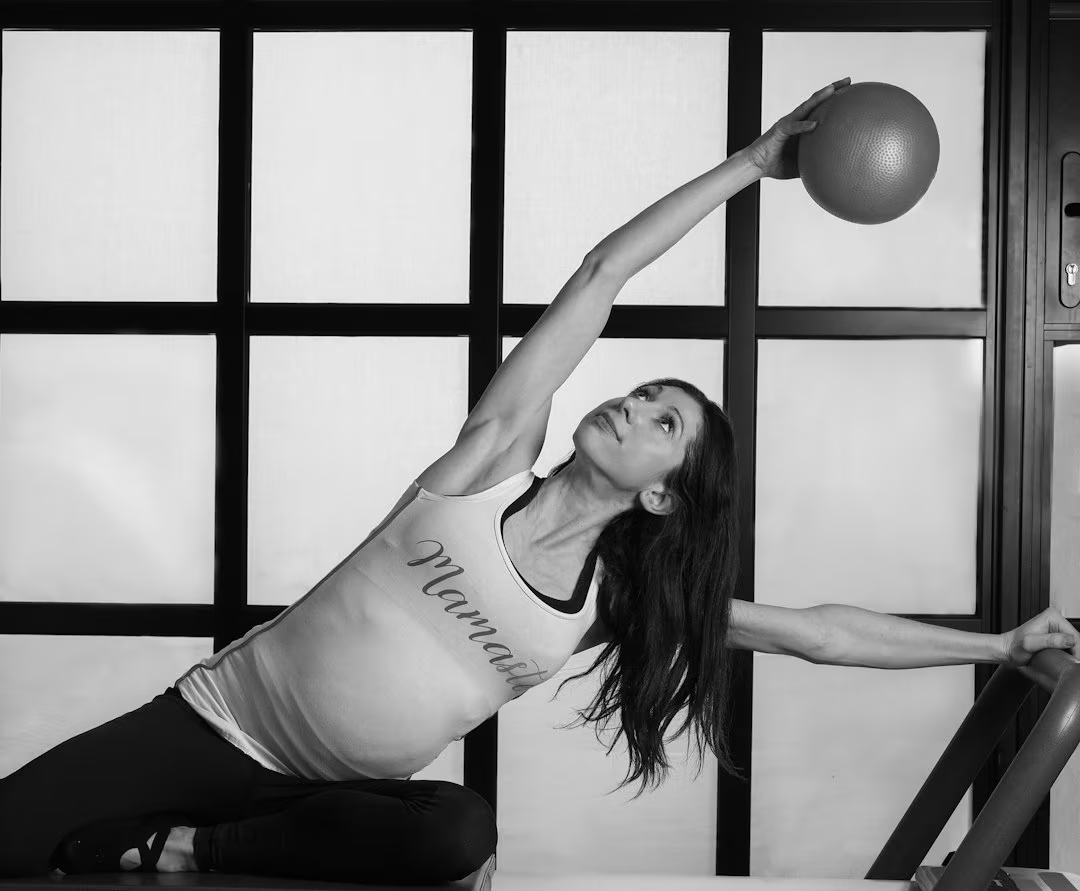
For new mothers, returning to fitness can be overwhelming. Should you wait until your six-week postpartum checkup? What are the right or wrong exercises post-baby? And when is it safe to hit the gym?
But postpartum fitness is not about how quickly the body returns to its pre-pregnancy weight or a flat belly. Having a baby changes your body beyond what you see in the mirror. The body undergoes profound physiological changes from ab-separation, stretched pelvic floor, urinary leakage/pain, rib flare, spinal shape change to even a permanent change in shoe size. In a conversation with HT Lifestyle, Sucheta Pal – maternal fitness educator and founder of Mom.Bod.Strong – highlights, “Several women silently experience postpartum depression, while ‘baby blues’ affect almost all of us at some point post childbirth. So yes the doctor’s visit at six weeks is a good starting point where the doctor may assess for uterine involution, infection and healing of C-sec scar or tear in vaginal birth. It’s a crucial medical necessity, but it is not an ‘all clear’ for every type of exercise. True readiness for returning to fitness the safe and right way requires a three-step framework: The first step is to understand your baseline. A qualified postpartum fitness coach should assess how your body manages everyday movement and exercise. The fitness educator explains, “The purpose of your core is to protect your spine, transfer or generate force and to stabilise the body. So the second and most crucial step is to rebuild coordination and connection in the deep core (the diaphragm, abdominal wall and pelvic floor) first with diaphragmatic breathing followed by anti-movement core work with exercises such as pelvic tilts, heel slides, bird dogs, suitcase carries, supported side planks, pall-of-press, deadbugs and appropriately modified strength movements. However, Sucheta also emphasises that there is no single core exercise sequence suitable for every woman. It needs to be personalised with the objective to develop control and strength. Mobility exercises support this strength building by improving range of motion in your spine, hips, and shoulders and adding a dance-fitness session to the mix is a great way to improve both cardio and mental health . Marathons, HIIT and heavy lifting require additional preparation. So signs of pelvic heaviness or pain, urinary or fecal leaking, bulging or doming along midline, low back pain during movement means a need to modify and an assessment is needed. One common mistake is treating medical clearance as permission to resume every pre-pregnancy workout. Sucheta highlights, “Endless crunches are not a universal solution for flat belly and pelvic floor training is not simply only kegels. These muscles need to activate, relax and coordinate appropriately. Recovery extends beyond the gym. She emphasises the importance of optimum nutrition , good hydration and rest as much as possible. “Remember, returning to fitness after childbirth is not a race to reclaim a pre-pregnancy body. It is a process of rebuilding strength, function and confidence while respecting your individual body and journey,” concludes Sucheta. Note to readers: This article is for informational purposes only and not a substitute for professional medical advice. Always seek the advice of your doctor with any questions about a medical condition. Sucheta Pal is a national award-winning maternal fitness expert and founder of Mom.Bod.Strong, a gynaecologist-recommended postpartum fitness programme. A Ministry of Women and Child Development awardee and TEDx speaker, she specialises in helping women improve their physical and mental well-being through movement and mindset.
Sucheta stresses, “Remember a beginner at the gym begins at zero but a postpartum woman starts at minus 10. A former global ambassador for Zumba, she has built a community across 15+ countries.
This includes breathing and core coordination, abdominal wall function (including Diastasis Recti), pelvic floor activation and release, and foundational movements such as squatting, hinging and carrying, according to Sucheta. Movements such as squats, hip hinges, rows, step-ups and supported lunges are great and one needs to slowly increase load and volume according to tolerance and symptoms.
