
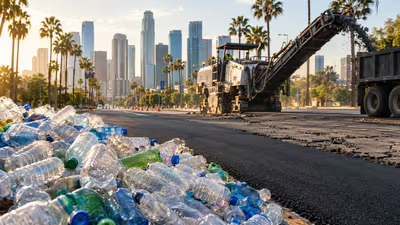
A 2021 review in Sustainability by researchers at Universiti Putra Malaysia and Misurata University notes that PET (polyethylene terephthalate), the plastic used in drink bottles, is not biodegradable and is a real environmental hazard. A plastic water bottle takes a few seconds to use and a long time to break down. So what do you do with that waste? Some engineers say the answer might be under our feet.
Microplastics are pieces of plastic less than 5 millimeters in size. Researchers from Chongqing Jiaotong University and Central South University, in a 2025 review in Materials, pointed to toxic emissions during production, microplastic formation, and ecological contamination. The authors also cite a life-cycle assessment, which indicated that PET combined with reclaimed asphalt helped cut down on carbon dioxide equivalent emissions up to 26.2 percent. However, it’s worth noting that the figure comes from a different kind of analysis than TechniSoil’s 90 percent claim, so the two cannot be compared directly.
Plastic in a road can be a cause for concern. The authors recommend using a balanced approach and monitoring microplastics in stormwater and soil.
PET and polystyrene are more prone to breaking down into microplastics than other plastics, it says.
It is an appealing concept: making use of the existing road and reused bottles. However, long-term field data on the project appear limited. Lab results are promising, but long-term results on real streets will matter most. Until those results are available, the 1st Street stretch is best viewed as a pilot.
