
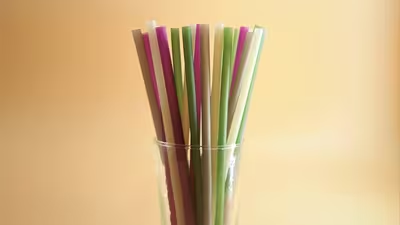
Paper straws were widely adopted as an alternative to plastic in the name of environmental protection. However, a government-commissioned study in South Korea suggests that the switch may not be as environmentally beneficial as many believed.
The assessment, commissioned by South Korea’s Ministry of Climate, Energy and Environment, compared four types of straws: conventional plastic, paper, biodegradable plastic and bio-based polyethylene (bio-PE), which can be made from renewable sources such as sugarcane.
The study was released on October 21 by Representative Kim Wi-sang of the People Power Party.
Paper straws score higher on carcinogenic impact
Researchers assessed the environmental impact of each type across 16 categories, tracking the straws from raw material production and manufacturing to their eventual disposal. Conventional plastic straws recorded the lowest impact in 10 categories, including climate change, human toxicity and particulate matter. The study found that paper straws had a human carcinogenic impact 6.33 times higher than that of conventional plastic straws over their life cycle. They also recorded 2.04 times the environmental acidification impact of their plastic counterparts. (Also read: Switching to paper straws to save the environment?
They are more toxic for you ) However, the carcinogenic impact figures do not directly indicate the risk of cancer to people using these straws. They are modelled estimates of the potential impact of pollution associated with the production, use and disposal of the materials.
