
H ans Bethe. Felix Bloch. Niels Bohr . Albert Einstein. Enrico Fermi. James Franck. Otto Frisch. Samuel Goudsmit. Lilli Hornig. Rolf Landshoff. Maria Goeppert Mayer . Rudolf Peierls. George Placzek. Eugene Rabinowitch. Joseph Rotblat. Leo Szilard. Edward Teller . Stanislaw Ulam. John von Neumann. Victor Weisskopf. Eugene Wigner. These are just some of the scientists who had emigrated from Europe, many of whom later made critical contributions to the Manhattan Project — the American effort to build the world’s first nuclear weapon.
Many of these scientists had seen firsthand the horrors Nazi Germany was perpetrating in Europe; many were Jews who were escaping persecution themselves. They showed their contempt for Adolf Hitler and his armies by bringing a sense of urgency to their research on the bomb, and were often motivated by what they believed the stake was: the fate of the world itself. In March 1944, a German physicist named Karl Wirtz had reported that Nazi Germany’s stocks of heavy water had accidentally been diluted to 98.85% purity. A post-war sample from Haigerloch in 1947 found only 96.8% purity. The team also started from the records of aluminium giant Norsk Hydro to estimate that Nazi Germany had a maximum supply of 1,836 kg of pure heavy water during the war.
By researchers from the U.S., Heisenberg & co. were actually way off the mark, according to a new study in PNAS Nexus .
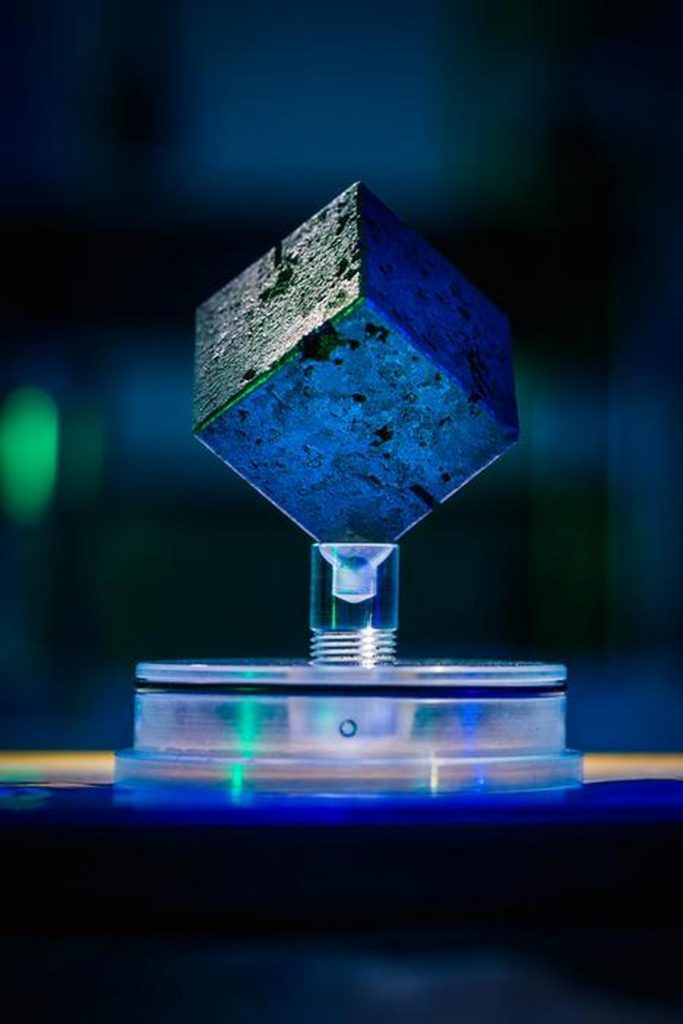
In simulations, it didn’t matter how far apart the uranium cubes in the B7 pile or in any previous piles could have been: the contamination made criticality impossible. The significant difference between the Nazi German and the Manhattan Project programmes, then, seems to have been industrial capacity. Nazi Germany had nothing of similar scale. Many questions about the Nazi nuclear programme still remain open, often rooted in different interpretations of common data. Some important ones are centered on whether German scientists deliberately delayed the bomb project. Some technical questions are open, too. For example, the purity of the heavy water at Haigerloch itself is unknown and the graphite’s boron content is based on archival rather than direct, firsthand information.
A 2025 study in The European Physical Journal H demurred, however: while the U.S. was able to source petroleum coke extremely low in boron and turn it into reactor-grade graphite, the graphite made from metallurgical coke in Germany was high in boron, which absorbs neutrons. The B8 pile used the graphite from the predecessor B7 pile, and the new study also found that it contained 3.4 weight-parts per million (wppm) of equivalent boron contamination. The Siemens graphite from earlier contained around 6.6 wppm. On the other hand, the Manhattan Project used graphite with around 1.4 wppm of boron. The Americans developed and built multiple technologies to enrich uranium, set up reactors and chemical separation units, and a weapons laboratory, which together created 1.3 lakh jobs and invested $2.2 billion at the peak. Some uranium from the Nazi nuclear programme had not experienced a significant neutron flux and had probably come from Joachimsthal in today’s Czechia, indicating (in a limited sense) the absence of an industrial uranium enrichment programme, according to a 2015 study in Angewandte Chemie .
