
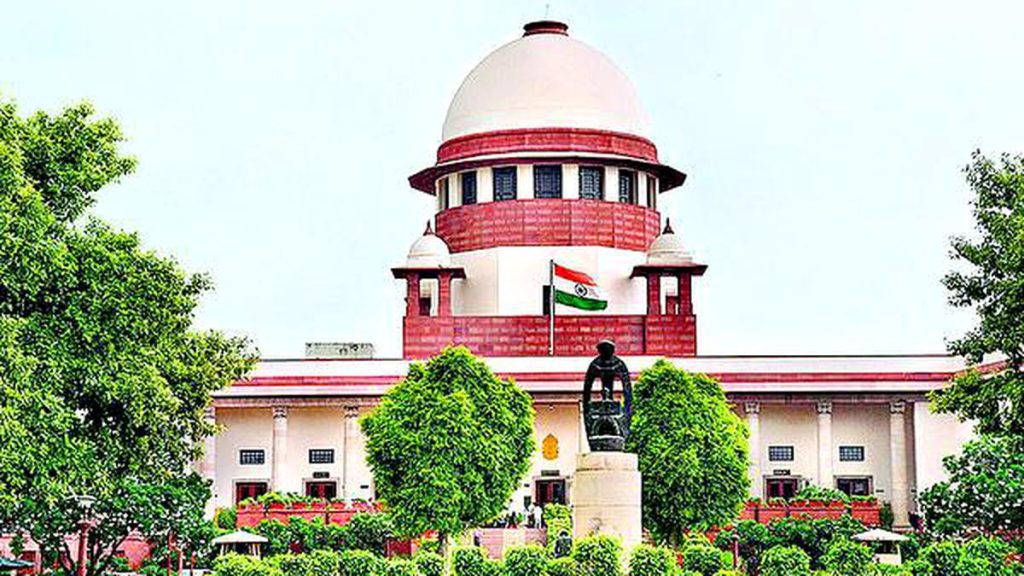
The NDA-ruled Andhra Pradesh government, in an affidavit in the Supreme Court, has refused to defend the Centre’s controversial 2026 amendments to the Transgender Persons (Protection of Rights) Act.
The amendments triggered widespread protests across the country and led members of the government’s National Council for Transgender Persons to resign over the changes, even as Parliament passed the Bill and the government notified it.
The Union government had introduced amendments to the law earlier this year, removing provisions that guaranteed transgender people the right to their “self-perceived gender identity” and limiting the definition of a “transgender person” to physiological characteristics. With the Union government yet to respond to the challenges to the law in the Supreme Court, the Andhra Pradesh government, ruled by the Telugu Desam Party, a BJP ally, has told the top court that it has “not taken any independent action that is discriminatory towards transgender persons”. In its affidavit, the Andhra Pradesh government also provided data on the number of transgender persons certified across the State, showing that of the total 3,750 applications for transgender identity cards, 3,233 had been issued certificates, 403 had been “filtered”, and 114 applications were pending. The State further asserted that it “remains committed to safeguarding the constitutional rights, dignity, equality, and welfare of transgender persons, and undertakes to faithfully comply with any directions or orders” that the court may issue. On the other hand, the BJP-ruled government in Uttarakhand has defended the 2026 amendments to the law, saying that matters related to rights and healthcare needs of transgender people are “influenced by social norms and existing systems”, in addition to government regulations. The Uttarakhand government’s submission to the Supreme Court in August, however, noted that the Centre should address the challenges to the law’s constitutionality, but the State proceeded to defend the law regardless, citing precedent that it was settled law to presume the constitutionality of an “enactment made by a competent legislature”. Furthermore, the Uttarakhand government has submitted that the amended law’s operation in the State had not resulted in “any denial, dilution, erosion or abridgement of the rights of transgender persons”, adding that the process of “identification, certification, welfare, and rehabilitation” of transgender persons has continued. the Union government and BJP-led NDA MPs insisted that retaining the principle of self-determination of gender identity would lead to people “falsely” claiming to be transgender in order to claim social welfare benefits While introducing the Bill in Parliament. This came even as Opposition MPs objected to the amendments, arguing that the right to self-determination of gender identity was recognised by the Supreme Court in its landmark NALSA judgment of 2014 and that removing this right was an “attack on Constitutional morality” and the dignity of transgender persons.
