
The medico-legal case (MLC) report of 25-year-old Sheikh Irshad Mansoori – one of the petitioners in the Supreme Court alleging the use of pellet guns during the July 20 protest – said multiple “metallic foreign” bodies were retrieved from his body during surgery, HT has learnt.
Event Context
The MLC – issued by the department of otolaryngology and head and neck surgery at Lady Hardinge Medical College (LHMC), dated July 24 and seen by HT – said that “the patient underwent surgery for foreign body retrieval under GA [general anesthesia] on 21/07/2026.”
Under diagnosis, it said, “Foreign body impaction in multiple sites of head and neck.”
Under “ENT Operation Theater (OT) notes”, it said, “Metallic foreign body retrieved (size around 2mm) from right maxillary antrum…Right oral cavity assessed for foreign body. One metallic foreign body of 2mm size retrieved from the right lower labial mucosa.. Metallic foreign body retrieved of approximately 2mm size from right shoulder, right neck, left forehead which were impacted superficially in soft tissue.”
Also read: ‘Leave the chair, become an influencer’: CJP’s Abhijeet Dipke takes swipe at PM Modi; questions anti-paper leak bill
Under “Ophthalmology OT notes”, it further said, “Left orbital exploration and foreign body removal; Left lower eyelid exploration and foreign body removal under GA.”
The document added, “Foreign body felt at about 8-10mm along the superior border of medial rectus muscle. 3mm local incision given through conjunctiva and tenon, soft tissue dissection done. Foreign body localized having multiple sharp edges, facets with metallic sheen, noncompressible metallic foreign body of approximate size 3x3mm cylindrical with one flat surface and sharp edges retrieved. Traction suture removed, ointment Ciplox applied, pad and bandage done.”
Mansoori told HT that at least seven such objects were removed from his body.
“A total of seven pellets or as written in the medical documents metallic foreign body have been removed from my body post-surgery. Some pellet-like objects are still around my face. The doctors have claimed that as of now they do not need to be surgically removed as removing them through surgery could cause more harm than letting them remain in the body,” he said.
Also read: Rahul Gandhi has two-point ‘advice’ for PM Modi, an ‘Opposition guarantee’ for student protesters: Key quotes
The patient discharge summary of Singh – also a petitioner in SC in the same case – said the patient was brought to LHMC at around 4:30pm on June 20.
Under “history and examination”, the document said, “The patient has pellet injuries to the right upper limb, chest and inguinal region with first-degree severity.”
Also read: NDA ally SKM defends student protests in Lok Sabha, calls them a ‘wake-up call’
Singh said the hospital did not tell him what objects hit him or were lodged in his body. “I was not shown my X-ray reports. They treated me, told me I would heal in some days and discharged me the same day. When I reached home, my friends saw my wounds and we researched on the internet to check and then figured out that these wounds were very similar to pellet wounds,” he added.
“No pellets have been taken out from my body. The doctors have informed me that there are around 20 metallic pellet-like objects in my body. They said that only if I develop any infection further, then they will do surgery to remove them from my body,” the reporter told HT on the condition of anonymity.
Another officer said that as per their enquiry, the pellets which were shot are suspected to be metallic pellets. He added that at least seven pellet rounds were fired by the RAF. “We have asked the RAF to draft a report on the weapon use. As per initial findings, seven such pellet rounds were fired.”
The officer added that, as per police records, around six people suffered “pellet-like” injuries and their medical records are still being examined. Police said many of them have been discharged and police are yet to get all their details.
Player Focus
The reporter’s MLC – issued by Safdarjung Hospital – showed injuries on the man’s waist and hands and called it “pellet injury marks”. The MLC also said “physical assault with pellet gun at Jantar Mantar at 4 pm”.
Toppo’s discharge papers – issued by Ram Manohar Lohia Hospital – mentioned that she was “presented with a previous history of injury in the right side of the ear, a suspected gunshot injury”.
Team Analysis
HT earlier reported that five people – Mansoori, a 25-year-old employee with a private firm, Nootan Toppo, a 32-year-old woman from Gurugram, a 28-year-old reporter, Prashant Singh, a 25-year-old Bihar resident, and 19-year-old Sahil Lochab, a student aspiring to join the police force – have alleged (in Lochab’s case the allegations were made by the family) that they were hit with pellets on July 20.
HT previously reported the medical records of Singh, the reporter, and Toppo.
Match Outlook
“The retrieved metallic foreign body has not been given to me, but the hospital has informed me that they will be keeping those with them,” he added.
LHMC did not respond to queries on whether the object had been sent for forensic analysis till the time of going to print.
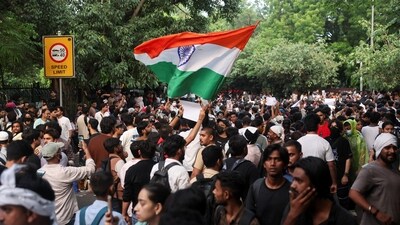
A senior Delhi Police officer said, “During any such demonstration, where it is expected that such a situation can arise due to the crowd, we call for paramilitary forces and ask them to bring anti-riot weapons. We don’t decide what all they can bring. When the violence broke out during the Cockroach Janta Party’s ‘Chalo Sansad’ march on July 20, the security personnel were asked to use force and anti-riot gear against protesters.”
The anti-riot weapons comprise plastic pellets, metallic pellets, shock batons and tear gas, said Delhi Police.
The inventory has not been shared with the Delhi Police and its use is only shared in a DD entry, said two police officers, requesting anonymity.
The senior Delhi Police officer quoted above added, “In two cases (Mansoori and Sahil), the pellets have been removed from the patient’s body. But we are yet to ascertain if they were metallic pellets or plastic pellets. Both seizures are with hospitals (Lady Hardinge and AIIMS) where the patients were admitted.”
source
On Wednesday, the Delhi Police issued a statement, saying, “Claims circulating on social media that a protester sustained gunshot injuries during the July 20, 2026, protest in Central Delhi are not corroborated by the MLC findings. MLC records a lacerated wound in front of the right tragus, with the nature of injury described as blunt. As per doctor’s opinion, it is a simple injury and there is no evidence of gunshot injury. Therefore, the claim of gunshot injury is not supported by the medical findings on the MLC. The public is advised to verify information through authentic sources before sharing such claims.”
Also read: ‘DMs filled with death threats’: CJP’s Ratna Singh says she relies on lessons from Jantar Mantar protest
HT reported on Wednesday that at least two rounds of pellets were used on July 20 on the orders of a deputy superintendent of the Delhi Police, according to the statement of a deputy commander of the Rapid Action Force (RAF) recorded in a general diary entry at the Parliament Street police station.
The diary entry – filed at 1.24am on July 22 by a Delhi Police sub-inspector and seen by HT – is the first document that shows the usage of pellets during a sprawling student march to Parliament on July 20.
RAF is a specialised unit within the Central Reserve Police Force (CRPF) deployed to handle riots and other public disturbances across the country. CRPF has already instituted an inquiry into the allegations.
Plastic pellets are different from metal pellets and are intended to cause less serious injuries. Metallic pellets have controversially been used in Jammu and Kashmir
