
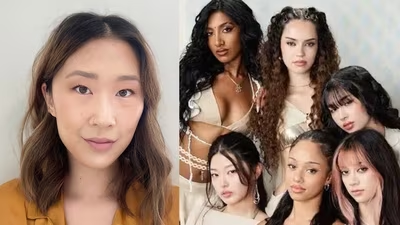
Michelle Chong, the casting force behind the formation of global girl group KATSEYE in 2024, is now scouting for India’s next pop stars. Leading HYBE INDIA’s audition campaign, she explains what excites her about an Indian girl group.
Michelle’s credits include collaborating on the casting, music direction and production of the hit reality series The X Factorand America’s Got Talent. She was also instrumental in the creation of girl group Fifth Harmony and in the development of Dream Academy, a global talent competition run by HYBE x Geffen Records to build a new international music group, which resulted in the formation of KATSEYE. As the casting director for the global audition campaign, including the Final Call, she shares her insights and observations in an exclusive interview with HT City. Q1. Michelle, given your expertise when it comes to spotting talent, we would love to hear how the casting journey for HYBE INDIA’s global girl group has been shaping up. What has your impression been of the talent you’ve encountered so far, and what are you looking for in the girls who could ultimately become part of this group?
Michelle Chong: Having worked on several casting projects, I’ve learnt that every search has its own identity, expectations and challenges. What makes my experience with HYBE INDIA particularly exciting is the opportunity to discover Indian talent with the potential to grow into a global girl group. The response so far, from across India and the Indian diaspora, has been incredible. It’s been wonderful to see so many young women come forward, each bringing their own talents, personalities, influences and aspirations to the process. What sets this search apart is the emphasis on potential, individuality and star quality, rather than simply looking for performers who are already fully developed. Technical ability is important, but so is that instinctive spark that makes you want to keep watching someone. It could be their stage presence, their interpretation of a song or dance, or the way they connect with an audience. These are qualities that can be difficult to teach, but they can tell you a great deal about what someone might become. Q2. Beyond singing and dancing ability, what are you looking for, since being an artist goes beyond just doing the job and is the complete package? Michelle Chong: For me, it starts with the person behind the performance. How do they carry themselves? Do they have a natural sense of expression? Can they hold your attention, communicate an emotion or bring something of their own to a performance? These qualities can look very different from one person to another, which is why individuality is so important. I also pay close attention to how someone responds to feedback and how willing they are to learn. At HYBE INDIA, we’re looking for artists who can grow beyond their current abilities and develop into well-rounded performers. Not everyone will arrive with every skill fully formed, and they don’t need to. Technical ability can be strengthened, and confidence can be built with experience. Q3. Having worked on Fifth Harmony and Dream Academy, what makes an artist capable of becoming a global star? Michelle Chong: I don’t think there’s one single quality that guarantees someone will become a global star. It’s usually a combination of artistry, individuality, emotional connection and the ability to keep evolving. You can be technically brilliant, but there also has to be something that makes an audience feel connected to you. I also don’t believe global appeal means trying to be everything to everyone. Often, it’s the artists who are most comfortable with their own identities who connect most meaningfully with people across cultures. Audiences respond to authenticity, whether that comes through a performer’s personality, perspective, music or the way they express themselves. The opportunity is to discover young women who can bring their own experiences and perspectives to the global stage, while enhancing the skills and confidence to reach audiences far beyond their immediate surroundings. Their individuality should be an asset, not something they feel they need to leave behind to succeed internationally. Q4. What do you think Indian talent brings to the global pop landscape that remains underexplored? Michelle Chong: I think Indian talent brings an extraordinary range of musical influences, cultural perspectives and ways of expressing emotion. India has a rich artistic heritage, and there’s a generation of young performers engaging with global pop while interpreting it through their own experiences. That intersection is particularly exciting. What makes the idea of an Indian girl group so compelling is the possibility of bringing together young women from different cultural, linguistic and regional backgrounds to create something distinctive as a collective. Each member can bring her own identity, influences and personality, while contributing to a shared artistic vision. That, to me, is a powerful expression of harmony in diversity. We’ve seen glimpses of this variety throughout the auditions, with performers bringing very different strengths and perspectives into the process. It’s a reminder that Indian talent cannot be defined by one particular sound, style or background. Q5. What has stood out to you about the talent you’ve seen in India so far? Michelle Chong: What has stood out most is the sheer variety of talent and the different ways these young women express themselves. India has always had an extraordinary pool of talent, but seeing so many different kinds of performers come forward for this search has been especially exciting. I’m particularly interested in the individuality each person brings into the room. It might be a distinctive voice, a natural sense of rhythm, an expressive personality or an unexpected interpretation of a performance. Sometimes, it’s a quality that’s difficult to put into words, but it makes you want to see more. When you’re casting across a country as diverse as India, it’s important not to have a fixed idea of what a promising artist should look like or where they should come from. Performers will arrive with different levels of training and experience, and each needs to be considered on their own merits and potential. Q6. KATSEYE came out of Dream Academy. What did that process teach you that you’re bringing to the India search? Michelle Chong: One of the biggest lessons is the importance of looking beyond a single performance. An audition gives you a snapshot of someone, but it can’t tell you everything about their personality, adaptability, work ethic or potential to grow as an artist. Casting requires you to recognise what’s in front of you while also remaining open to what that person could become. These principles are relevant to any casting process, but they’re especially meaningful for HYBE INDIA, given the diversity of talent and cultural influences across the country. The task is not to reproduce what has worked in another market, but to draw on that experience and adapt it to the people, context and creative possibilities here. Ultimately, the most important lesson is to stay open-minded. You need a clear vision for the group, but you also need to allow the talent you discover to shape what that group can become. Q7. How is the casting team approaching the India search, and what does the journey look like for a girl once she auditions? Michelle Chong: One of the most important aspects of HYBE INDIA’s approach is making the audition accessible through different routes. Online applications, on-ground auditions and wider outreach give aspiring performers different ways to put themselves forward, rather than making the opportunity dependent on living in a particular city or having existing industry connections. The response to the initial audition has been incredible, and the variety of talent coming forward has reinforced the importance of widening the search. The Audition Final Call is an extension of that effort, helping the opportunity reach beyond major cities and into more regions of the country. The next generation of global stars can come from anywhere, and we want to give promising talent more opportunities to be seen. From a casting perspective, the audition is the first step in understanding a performer. We look at their abilities, individuality and potential, while also considering the areas in which they might excel further. For those who progress, the broader artist training and development journey can involve structured lessons, performance development and mentorship, tailored to the needs of the individual and the goals of the group. It’s important to understand that an audition is an opportunity to be considered, rather than a guarantee of a particular outcome. Every stage of the process serves a purpose, and the ultimate aim is to identify individuals who have the potential to grow into artists capable of connecting with audiences around the world. Q8. Beyond talent, what qualities tell you a girl can handle the pressure of training and global fame? Michelle Chong: Beyond talent, I would look for resilience, self-awareness, discipline and a genuine willingness to learn. Growing as an artist involves receiving feedback, working through setbacks and accepting that progress doesn’t always happen in a straight line. Someone who can stay curious, learn from challenges and keep working towards their goals has a valuable foundation. I also think it’s important to distinguish between confidence and having everything figured out. An aspiring artist doesn’t need to be completely self-assured at every stage. What matters is their willingness to grow, ask questions, accept guidance and gradually become more comfortable with who they are as a performer. At the same time, these are young people with their own personalities, circumstances and aspirations. Artist development should be about helping them build the skills, confidence and self-awareness to navigate their careers, not simply preparing them to perform under pressure. Talent might open the door, but the ability to keep learning, stay grounded and remain committed to the craft is what can help an artist sustain that journey over time. Q9. How important is a girl’s ability to connect with fans across cultures, and what makes someone relatable to a global audience? Michelle Chong: I think connection is at the heart of being an artist. You might admire someone’s technical ability, but the performers who stay with you are often the ones who make you feel something or help you recognise a part of your own experience in their work. That connection doesn’t require people to share the same language, background or life story. It can come through emotion, personality, humour, vulnerability or the way someone expresses themselves on stage. When a performance feels genuine, audiences can respond to it even when the artist’s experiences are very different from their own. That’s what makes the idea behind these auditions particularly exciting. There’s an opportunity to discover artists who remain authentic to their own identities while finding ways to connect with audiences across cultures. Their Indian roots and personal stories can be an important part of what makes them distinctive, rather than a barrier to international appeal. For a group, there’s also something powerful about having different members connect with people in different ways. Each person can bring a unique perspective and build a relationship with audiences on her own terms, while contributing to the group’s collective identity. That individuality can make the connection even richer.
Because it has given me the opportunity to experience that diversity firsthand, i feel fortunate to be part of this journey with HYBE INDIA.
