
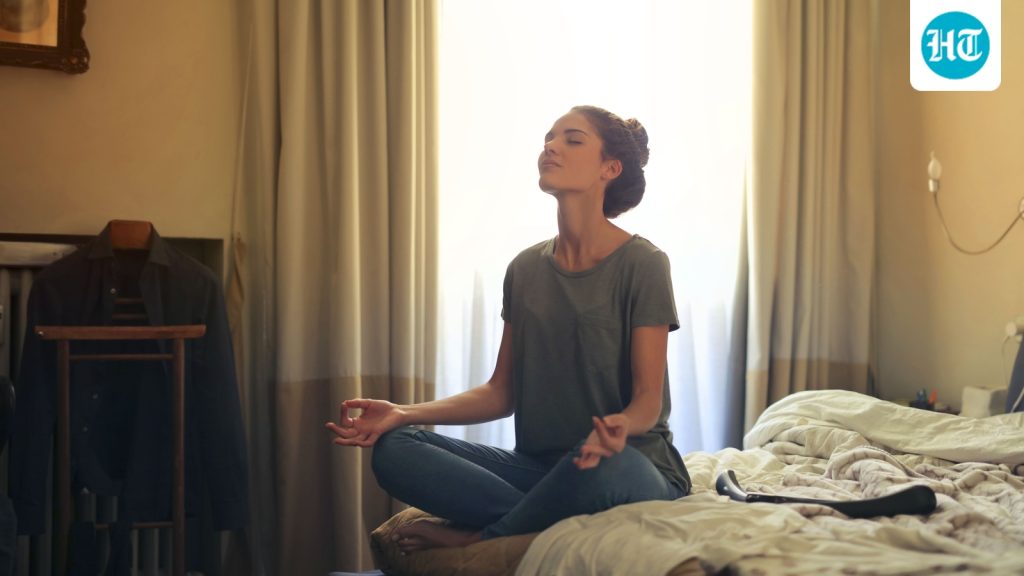
When you hear the word mindfulness, you may imagine sitting quietly with your eyes closed and focusing on your breath. But mindfulness does not always need a meditation cushion or a long period of silence.
You can practise it while eating, brushing your teeth, walking or simply paying attention to what happens around you. Also Read Meditation and mindfulness are known for cognitive health benefits. But experts say they can have a difficult side Mindfulness simply means paying attention to the present moment without judging what you notice. You can observe your thoughts, feelings, body and surroundings as they are. You do not need to push thoughts away or try to make your mind completely quiet. Mayo Clinic explains that mindfulness means becoming aware of your thoughts without getting caught up in them. Also Read Mindfulness meditation can help you return to the present. Johns Hopkins explains how to break the autopilot habit You can start with something you already do every day. When you brush your teeth, notice the movement of your hand, the taste of the toothpaste and the feeling of the brush. When you eat, slow down and notice the smell, taste and texture of your food.
In an article published on January 21, 2026, Mayo Clinic explains that you can bring mindfulness into simple moments of your day.
The goal is simple. Give your full attention to what you are doing instead of rushing through it while thinking about the next task. Walking can also give you a simple way to practise mindfulness. You do not need a special place or a long walk. As you walk, notice how your feet touch the ground. Pay attention to the sounds around you, the air on your skin and the sights you pass. This can help you step away from autopilot and notice the moment you are actually living. You do not have to set aside an hour for mindfulness. It also notes that you can start with a few minutes of practice. You can pause for a few breaths between tasks. Look around you. Notice what you hear. Feel your feet on the floor. Then return to what you were doing. For some people, mindfulness can create space for quiet reflection and self-awareness. You may use an ordinary moment to slow down and notice what you feel instead of moving through the day without thinking. You do not have to follow a particular spiritual tradition to practise mindfulness. You can simply use it as a way to become more present in your own life. Sometimes, being present does not require you to stop your life. You can simply learn to be fully there while you live it. Disclaimer: This article is for informational purposes only and not for medical substitute. Reader’s discretion is advised.
Mayo Clinic says you can practise mindfulness while walking, sitting, standing or lying down. Mayo Clinic says even brief moments of mindful awareness during daily activities count. Mayo Clinic says mindfulness can support focus, stress management, mood and a greater sense of awareness.
