
This quarter of humanity administers the vast majority of the world’s 600 million farms and produces one-third of all food.
We became used to thinking, first, that peasant agriculture must necessarily die off with the spread of large-scale plantations and heavy machinery. Peasant agriculture has thrived in the industrial era, coexisting with and complementing newer forms. In many places – especially in Asia, but elsewhere too – large farms, industrial plantations and peasant operations are located side by side. Yes: wheat production can be carried out on a vast scale with little human labour and high inputs of fossil fuels and fertilisers; such techniques have become standardised from the US to Ukraine to India. Cotton production has been mechanised in the USA and Europe, but the quality suffers, which is why peasant production continues to dominate: small family farms in India contribute by far the greatest proportion of global supplies.
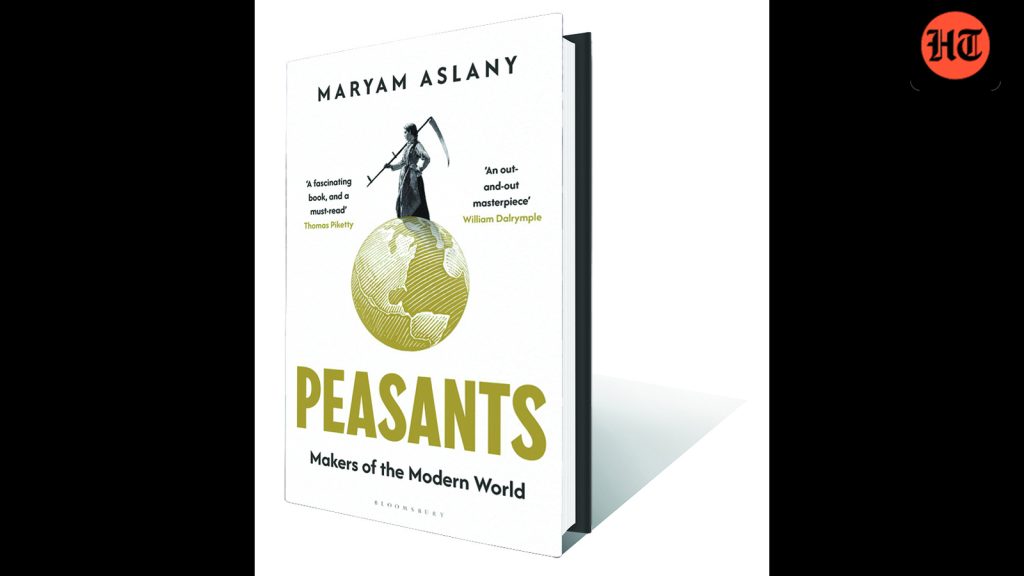
But this was based on an extrapolation from the highly specific experience of north-western Europe and, 250 years after the industrial revolution, it has still not happened. Rice is grown predominantly by smallholder farmers, especially in Asia, where production is dominated by small family farms, which employ hundreds of millions of people – and provide the staple food for 3.5 billion. Far from dying off in the face of industrial modernity, in other words, the peasantry is growing with it. (Excerpted with permission from Peasants: Makers of the Modern World by Maryam Aslany, published by Bloomsbury India; 2026)
Because the ‘psychodrama’ of modernity gave us an enormous need to divorce ourselves from the peasant, and so we developed a number of compelling – if unexamined – stories about her demise. In our desire to become modern, we wrote this largest and most essential of populations out of the world story. How was this even possible? Two of these stories are particularly widespread: many of the readers of this book will already have recited them in their heads. The first is that industry must take over agriculture; the second that cities must absorb everyone from the countryside.
