
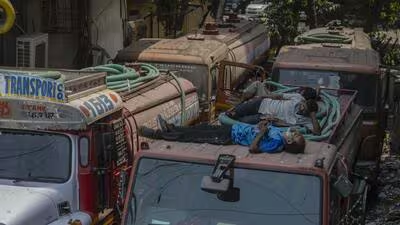
Mumbai: With drinking water shortages looming in parts of Maharashtra next summer, the state government has begun preparations months in advance, directing district administrations to identify vulnerable villages, strengthen existing water sources and treat water tankers as a last resort.
“Groundwater Surveys and Development Agency (GSDA) shall identify villages and hamlets likely to face drinking water shortages by assessing rainfall patterns and groundwater levels and submit the list to district collectors by October. The collectors have been directed to approve scarcity action plans only for areas where such interventions are actually required,” stated a circular issued by the state water and soil conservation department on Wednesday.
The circular emphasises preventive measures over emergency water supply. In villages identified as vulnerable, authorities have been directed to immediately undertake water conservation and source-strengthening works and complete pending source-related works under the Jal Jeevan Mission on a war footing. Under the schedule laid down by the government, action plans for October-December 2026 must be submitted by November 15, those for January-March 2027 by December 20, and plans covering April-June 2027 by January 20. The government has also invoked provisions of the Maharashtra Groundwater (Development and Management) Act, 2009, to regulate groundwater extraction around drinking water sources. Under Section 21 of the Act, permission cannot be granted for wells intended for non-drinking purposes within 500 metres of a drinking water source. District authorities can also prohibit extraction from existing wells if it is adversely affecting a public drinking water source under Section 22. Section 26 further empowers authorities to impose a temporary ban on groundwater extraction through wells located within one kilometre of public drinking water sources.
