
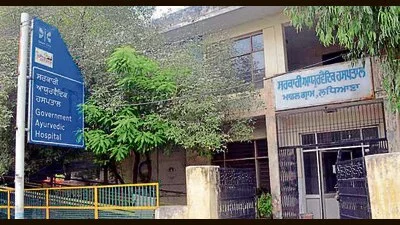
A medicine shortage continues to plague government ayurvedic dispensaries in Ludhiana for the second consecutive year, leaving thousands of patients without access to free healthcare.
Latest Update
“Every time I visit, the doctor writes the prescription but asks me to purchase the medicines from outside because nothing is available. If we have to buy medicines ourselves, what is the purpose of coming to a government dispensary?” he asked.
Echoing similar concerns, Ramesh Yadav, who visits an ayurvedic dispensary for digestive ailments, said the situation has remained unchanged for months.
“Medicines have not been available for a long time. Many people come here expecting free treatment but end up spending hundreds of rupees at private chemists. Poor patients simply cannot afford it,” he said.
For Sheela Devi, the prolonged shortage has affected the continuity of treatment.
“Earlier we relied on government dispensaries because medicines were provided free of cost. Now many patients skip treatment or reduce doses as buying medicines every month is expensive. We have been hearing that supplies will come soon, but nothing has changed,” she said.
Health experts say the continued shortage undermines the objective of providing affordable traditional healthcare, particularly for economically weaker sections and elderly patients who depend heavily on government facilities for long-term treatment.
If the department’s latest timeline holds, regular medicine supplies will resume only after nearly 14 months of disruption, making it one of the longest medicine shortages witnessed in Ludhiana’s government ayurvedic healthcare system in recent years.
Details
Across the district’s 64 government ayurvedic health institutions, including the Government Ayurvedic Hospital at Model Gram, patients continue to return with prescriptions instead of medicines. At the same time, the department battles both procurement delays and a severe manpower shortage. The shortage first surfaced in 2025 and remains unresolved despite repeated assurances from the department. With fresh supplies still at least two months away, patients say they have been forced to pay for medicines from private pharmacies or to discontinue treatment altogether.
Dr Raman Khanna, district ayurveda and Unani officer, who is also holding the additional charge of director ayurveda, Punjab, said the department had floated a tender for procurement of medicines in August 2025, but it had to be cancelled due to technical reasons.
“A fresh tender was floated in March this year, and the supply order was issued on July 2. Around 26 categories of ayurvedic medicines have been approved, and the supplies are expected to reach Ludhiana within the next two months,” Khanna said.
Asked how dispensaries had been functioning without medicines for nearly a year, Khanna said NGOs had stepped in to bridge the gap.
“NGOs have been helping us meet the immediate medicine requirements of patients until the fresh supplies reach the district,” he said.
The department is simultaneously struggling with a manpower crunch. According to Khanna, nearly 30% of doctors’ posts and 45% of pharmacist posts remain vacant across Ludhiana district.
“A proposal seeking recruitment against the vacant posts has already been sent to the Punjab government, and we are awaiting approval,” he added.
For patients, however, the official assurances have brought little relief.
Standing outside a government ayurvedic dispensary after collecting a prescription, Suresh Kumar said he had been visiting the facility regularly for treatment of chronic joint pain but had not received medicines for months.
