
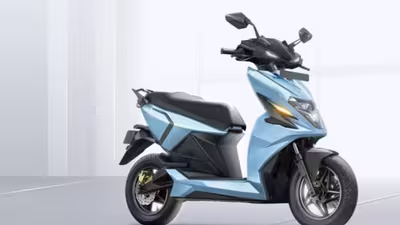
The Centre has proposed changes to the Central Motor Vehicles Rules, 1989, that would exclude certain low-powered, two-wheeled, battery-operated vehicles from being treated as motor vehicles under the Motor Vehicles Act. The draft rules, notified by the ministry of road transport and highways published on Thursday, propose that the changes come into force from October 1, 2026.
Velmurugan S, senior advisor at National Council of Applied Economic Research and former road safety scientist at Central Road Research Institute expressed concern, saying the vehicles could be used by children, while raising questions over third-party insurance in the event of a fatal crash . Under the proposed definition, a two-wheeled, battery-operated vehicle would not be deemed a motor vehicle if a specified testing agency verifies that it has an electric motor with a 30-minute power of less than 0.6 kW and a maximum speed below 25 kmph. For pedal-assisted vehicles with an auxiliary electric motor, the draft additionally requires the motor’s 30-minute power to be below 0.6 kW and its output to progressively reduce and finally cut off when the vehicle reaches 25 kmph, or sooner if the cyclist stops pedalling. The vehicles covered by the provision would also have to comply with specified safety requirements under AIS-049 (Rev.1).
“At least, if they make helmet use mandatory, it makes good sense.”
