
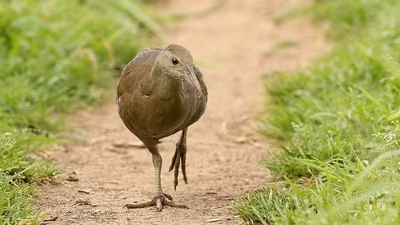
The Lord Howe woodhen, found nowhere else on earth, was reduced to just 9 breeding pairs in the 1970s, according to a media release from the NSW government . A survey in December 2024, announced in March 2025, puts the total at a minimum of 1,638 birds, a striking turnaround for a species that was once on the brink of extinction. Good news about wildlife is rare, and this flightless island bird is worth a closer look.
In their paper , Dean Portelli and Nicholas Carlile explain that the species was pushed to the brink of extinction by hunting pressure and introduced predators. The woodhen is endemic to Lord Howe Island, off the mid-east coast of Australia. The recovery program focused on feral pigs, cats, and goats. Portelli and Carlile wrote that removing rodents would likely help the population grow further.
Lord Howe Island Board chief executive Suzie Christensen said that about 50 years ago, fewer than 30 woodhens were believed to remain in the world. The Lord Howe Island Rodent Eradication Project completed its final stage in 2019. It is the biggest of its type on an inhabited island anywhere in the world and was declared a success in 2023 after two years of monitoring and checks found no rodents, the NSW release says.
Because rodents, including rats, were still on the island, pigs and cats were not the last pest problem.
After that final stage, the release said, the numbers jumped.
The woodhen feeds mainly on the forest floor, on earthworms, mollusks, and other invertebrates. The release describes them as an indicator species , meaning their health reflects the health of the wider ecosystem, and the island is a World Heritage site. They are still listed as endangered by New South Wales and the Australian Government, and a biosecurity program is in place to protect the island’s flora and fauna.
The recovery effort started in 1978, and according to Christensen, it was a collective effort.
