
It strengthens the voices of people in recovery and reflects a global shift toward involving lived experience as active partners in care. This is especially relevant in Punjab, where addiction requires responses that go beyond treatment and enforcement.
The Prime Minister’s recognition of young people who overcome addiction as “real warriors” and his call to give them a second chance can mark an important step for India’s public-health approach.
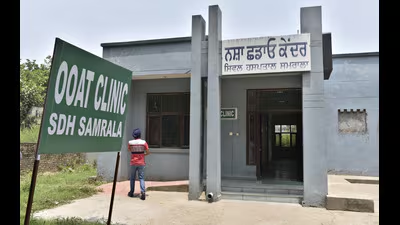
Policy discussions in Punjab echo these concerns. The Vidhan Sabha Committee on Government Assurances has highlighted that large-scale procurement of medicines, including buprenorphine, cannot by itself ensure recovery. It recommends strengthening counselling, rehabilitation, and psychosocial support, and measuring success by reintegration into a healthy, productive life rather than by medical outputs alone. experts like Prof Aditya Parihar stress that lasting change will require stronger recognition of psychosocial interventions alongside medical treatment While government initiatives are moving toward a more integrated model. These experiences also raise important policy questions: why are government rehabilitation centres often underutilised while private facilities remain overcrowded? Why is investment in medicines far greater than investment in social work, family support, and community-based recovery systems? A healthier Punjab will depend on making prevention and recovery a shared social responsibility. Healthier youth and healthy country need this deeper understanding. Thank you, Hon’ble Prime Minister and Hon’ble Union Home Minister for your sustained efforts. (The writer, India’s first female IPS officer, is former lieutenant governor of Puducherry)
