
In Connaught Place, after sundown, a bald man in a black suit and tie is sitting alone, without even a mobile phone, on a low cement ledge close to Anil Book Corner, shut for the day. He is looking down. A few feet away, Delhi continues. The one-way road behind the solo citizen is crammed with cars and autos. The showrooms on the other side of the road are glowing with light.
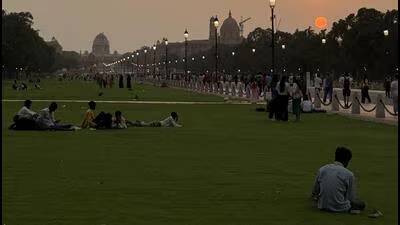
The sight of someone alone in a crowded space is an ordinary one in a big city. It brings to mind poet Emily Dickinson’s haunting portrayal of loneliness as a “horror not to be surveyed. Perhaps nowhere in Delhi is the poignant loneliness of the big city more visible than along the main avenue of Chandni Chowk, home and workplace to countless migrant men living far from their villages. That particular kind of loneliness, tied to place and circumstance, was surveyed in this space a few months ago. Here, the concern is with something more ambiguous: solitude, which may or may not be loneliness. What follows is a brief survey of big-city aloneness, an anthology of scenes gathered across Delhi over a number of days. Inside a restaurant in Khan Market, two people are sitting on the same sofa with a wide space between them. Yellow light falls on the wall behind them. Whether these two are strangers or know each other, the distance between them is unmistakable.
