
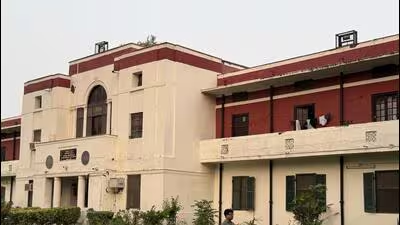
A board gives the year of its establishment as 1937. Fireplaces inside the rooms. Outside, facing balconies look out over serene lawns adorned with towering palm trees. This is Gwyer Hall, Delhi University’s oldest hostel for men.
A hostel room is a luxury for many Delhi University students. With accommodation limited, many are obliged to reside in cramped neighbourhoods outside their academic campuses. In September, a private building housing students in Satya Niketan, near South Campus, collapsed, killing seven young people. The tragedy drew renewed attention to the paucity of university accommodation. In the dining hall, long wooden tables stand in rows, with benches on either side. Fans hang from the high ceiling on long rods. Small roshandans are set high in the walls, above the arched glass-panelled doors. The gold light of the 5pm sun is falling beside a framed portrait of Maurice Gwyer. Delhi University’s only British vice chancellor, he helped establish Miranda House, which shared its name with his daughter. Some frames hold name slips. Gangipogu Vijay K., PhD/ Anthropology; Mr. Rajesh Kr. Jena, PhD/East Asian Studies; and so on. A bust of Prime Minister Jawaharlal Nehru stands in a glass-fronted recess. In these quiet, beautiful surroundings, the city’s interruptions and hostilities seem far away. You imagine students here absorbed in their Keats and Keynes, their minds easy with the assurance of having a room in which to think, study, and sleep. Indeed, every university student coming from outside Delhi deserves access to such accommodation.
Elsewhere in the dining hall, a wall display titled “Martyrs of Pulwama” holds rows of 40 photographs. In the hostel’s entrance hall, a large board headed “Gwyer Hall Residents” bears room numbers painted in white, each above a small metal frame. Each name is honoured with a “Mr,” as in Mr.
