
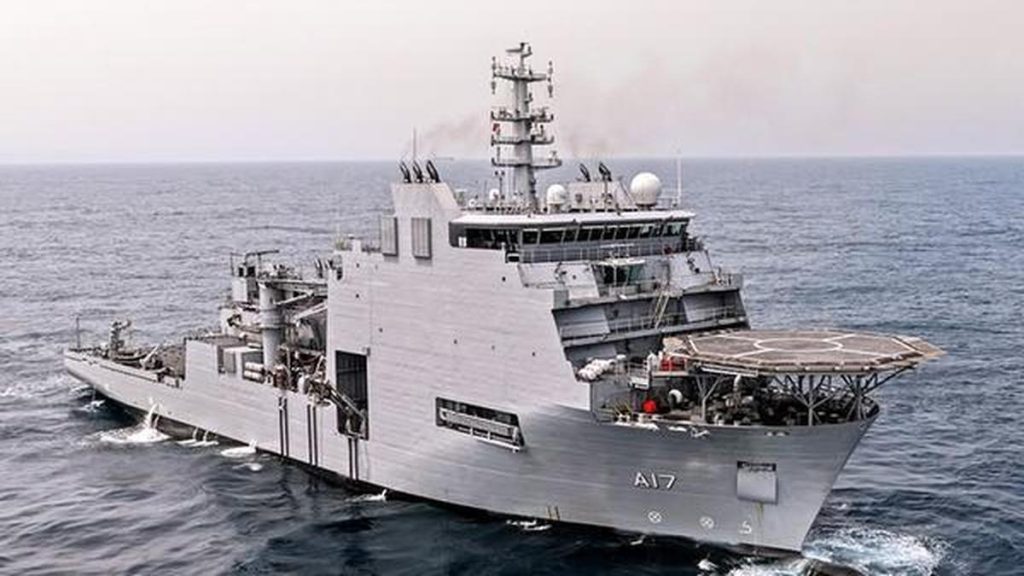
The commissioning of INS Nipun , the Indian Navy’s second Diving Support Vessel (DSV) of the Nistar class, marks a significant strengthening of India’s ability to operate in one of the most challenging domains of maritime warfare beneath the sea.
Indigenously designed and constructed by Hindustan Shipyard Limited (HSL), Visakhapatnam, the vessel represents another step in India’s efforts to develop advanced naval capabilities and reduce dependence on foreign suppliers for complex military platforms. Unlike destroyers, frigates or aircraft carriers, INS Nipun is not designed primarily for combat. Its role is to support highly specialised operations that require divers, remotely operated underwater systems, sophisticated life-support infrastructure and medical facilities. ALSO WATCH INS NIPUN: India’s new deep-sea rescue vessel INS Nipun is a purpose-built platform capable of supporting saturation diving, air diving and heliox diving. These capabilities enable divers to undertake sustained and complex operations at significant depths. Deep-sea diving is among the most technically demanding activities undertaken by a navy. Divers operating at great depths are exposed to extreme pressure and require specialised decompression and life-support systems. Saturation diving allows personnel to remain under pressure in a controlled environment for extended periods, making prolonged underwater operations possible. The vessel is equipped with remotely operated underwater systems for inspection and intervention, along with specialised diving complexes, life-support facilities and medical infrastructure. Another critical capability is dynamic positioning. During underwater operations, a support vessel must maintain its position with great precision despite currents and weather conditions. This is essential when divers or specialised equipment are operating far below the surface. INS Nipun can also support underwater salvage missions, allowing the Navy to inspect, recover or intervene in underwater accidents and contingencies. The answer lies in the growing importance of the underwater domain. The Indian Navy operates a large and expanding submarine fleet, while the Indian Ocean Region is becoming increasingly contested. Submarines, underwater drones and critical undersea infrastructure have made the ability to operate beneath the surface strategically important. A submarine emergency is among the most complicated situations a navy can confront. If a submarine is stranded underwater, rescuing its crew requires specialised equipment and trained personnel. A conventional warship cannot simply conduct such an operation. It requires an entire ecosystem involving diving systems, remotely operated vehicles, hyperbaric facilities, rescue vehicles and a large support platform capable of coordinating operations at sea. INS Nipun and her sister ship INS Nistar provide this crucial support capability. The vessels can support submarine rescue operations, strengthening the Indian Navy’s ability to respond rapidly to underwater emergencies. They also provide specialised support for salvage operations and can potentially be deployed for humanitarian assistance and disaster relief missions involving underwater contingencies. This has significance beyond India’s own submarine fleet. A country with specialised submarine rescue infrastructure can assist friendly nations facing underwater emergencies. Given India’s geographical position in the Indian Ocean and its expanding role as a regional security provider, such capabilities add another dimension to its maritime diplomacy.
Commissioned at the Naval Dockyard in Mumbai on Monday (August 31, 2026), INS Nipun is a specialised vessel designed for deep-sea diving, underwater intervention, salvage and submarine rescue operations.
The Indian Navy has increasingly sought to develop the capability to act as a “Preferred Submarine Rescue Partner” in the Indian Ocean Region.

INS Nistar, commissioned in July 2025, has been deployed under the Eastern Naval Command. INS Nistar, the first vessel of the class, entered service in July 2025, while INS Nipun was commissioned on August 31, 2026. The deployment of INS Nipun on the West Coast under the Western Naval Command will strengthen specialised underwater capabilities in a strategically important maritime theatre. The Nistar-class programme is also important from the perspective of Aatmanirbhar Bharat in defence manufacturing. Both INS Nipun and INS Nistar were designed and constructed by Hindustan Shipyard Limited. Building specialised Diving Support Vessels requires the integration of sophisticated diving, medical, engineering and underwater intervention systems. The successful construction of such vessels demonstrates the growing maturity of India’s naval shipbuilding industry. The two-vessel programme has now reached completion with the commissioning of INS Nipun. The staggered induction of the two vessels has given the Navy a specialised capability that can support operations across India’s vast maritime areas.
