
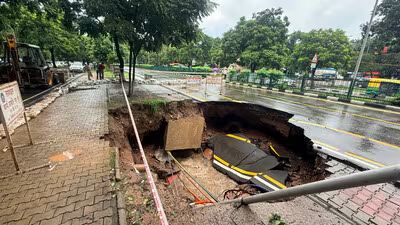
Inadequate drainage capacity, solid waste blocking road gullies and the overflowing N-choe were among the factors that left almost the entire Chandigarh inundated after 72.4 mm of rain in two hours on Tuesday evening. Rainwater entered houses in Sector 16 and also the mobile shops in the basement of Sector 22, damaging phones and cameras. The waterlogging, which was more than three feet deep at some places, brought the city to a standstill, flooding roads, markets and houses and leaving commuters stranded for hours. Social media platforms were flooded with residents’ woes. It laid bare the tall claims of the Municipal Corporation and the city administration regarding monsoon preparedness and exposed chinks in the drainage system.
The MC is responsible for cleaning 30,452 road gullies ahead of the monsoon. Even as officials confirmed that road gullies had been cleared, a number of councillors, representatives of resident welfare associations (RWAs) and residents said the gullies are generally cleaned only on paper. The N-choe—one of the main stormwater carriers in the city—was already running near saturation due to heavy rainfall, reducing the city’s drainage capacity. As a result, several northern sectors experienced severe waterlogging.
The stormwater system is designed to channel rainwater into natural drainage channels, known as choes, including the N-choe. Low-lying areas saw an accumulation of rainwater as storm inflows exceeded the carrying capacity of the choe system. “The road gullies are not cleaned properly. The Madhya Marg cave-in was triggered by a burst stormwater drainage pipeline running parallel to the road, initial findings by the MC indicated. The rupture, aggravated by intense rainfall, led to continuous leakage of water into the surrounding soil.
This is the main reason behind waterlogging,” said Gurpreet Singh Gabi, Congress councillor and leader of the opposition in the MC House.
A mandatory pre-audit system for underground utilities is required before and after road construction, according to former chief engineer Mukesh Anand. Calling for thorough cleaning of road gullies, Anand said that failing to do so prevents proper drainage and thus increases surface and subsurface water pressure during heavy rainfall.
Key recommendations include mapping all underground services, including water, sewer and drainage lines; inspecting leakage-prone joints and pipe integrity; carrying out routine maintenance and preventive checks; desilting and fully cleaning road gullies before the monsoon; and ensuring proper evacuation of stormwater through connected channels.
