
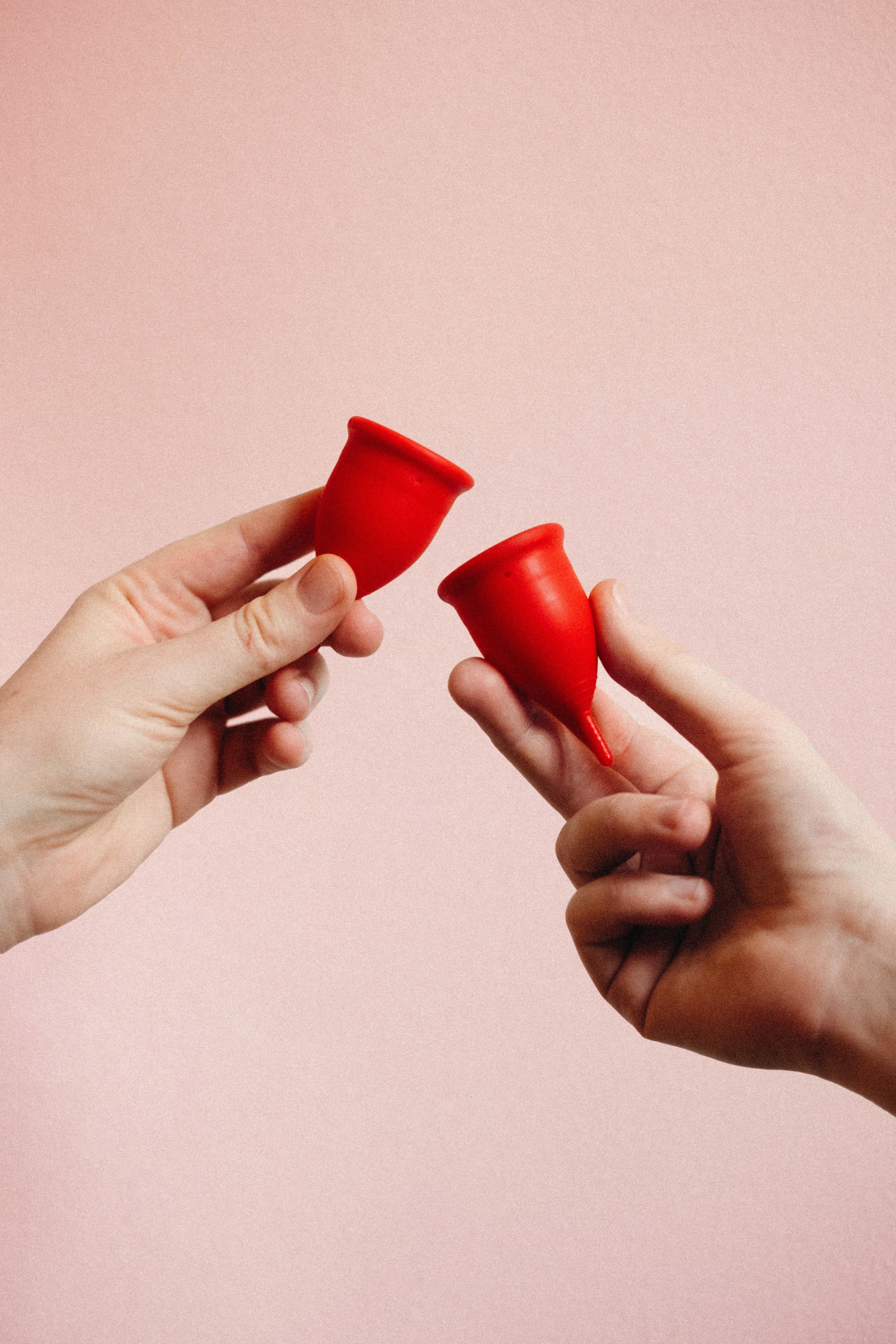
I was 29 when I first tried a menstrual cup, and periods for me have never been the same. For the longest time, like many women, I was also wearing sanitary pads during my menstrual cycle . Painful, yes, but also less stressful.
Because it was easy, that’s what my mother taught me to wear, what my friends and colleagues around me were wearing, and.
Ditching the sanitary pad was the easiest decision I made. When I first heard about menstrual cups, like many women, I was sceptical, wondering how on earth the silicone cup would go inside my body. They sounded invasive, troublesome, and painful. But after I tried one, I realised it wasn’t nearly as complicated. Yes, the first few times, it was difficult to understand how to use it properly, and I had to use pads on heavy flow days to avoid spotting. But once I did, there was no going back. I am glad to avoid the extraordinary amount of plastic, packaging and waste. I empty my cup twice a day, in the morning and in the evening. Moreover, once I got the hang of it, it never leaked, even on heavy days. Travelling became much easier, and I could sleep in any position I found comfortable. I could go inside water, too. But don’t just listen to me, hear from the experts. To give you more clarity on menstrual cups, I got in touch with Dr Asha Dalal, director of the department of obstetrics and gynaecology, Sir HN Reliance Foundation Hospital.
Most importantly, better for the environment since I am not discarding 2 to 3 pads every day. A 2022 study by Cleaner Environmental Systems showed that conventional pads are estimated to be 90% plastic, which, along with their wrappers, wings and adhesives, adds some 2g of non-biodegradable plastic to the environment with each use and takes an estimated 500 to 800 years to decompose Moreover, I was used to spending approximately ₹ 300-350 per month, given that a packet of 10 pads usually costs ₹ 350. Whereas a period cup costs anywhere between ₹ 300 and 500, and lasts for years, depending on one’s usage and manufacturer. From how to use a period cup, busting myths related to it, which size is perfect for whom, if a cup is better than a tampon or pads, to the hymen myth and more, Dr Dalal, who has over 43 years of experience, clarified several doubts.
Nearly all menstruating people, including teenagers, virgins, postpartum women (six weeks after birth), and those with IUDs (after proper placement), can use a menstrual cup. Women with certain uterine abnormalities, an unhealed vagina, and active infections must consult a doctor before using a cup. No menstrual hygiene product fits every woman perfectly. However, cups have several benefits – they are: But some users might experience discomfort during insertion and removal, especially if they are novices. Pads and tampons are still safe and effective options. Also, one cup can last for years. The size of a cup is not dictated solely by childbearing. In general, manufacturers consider several parameters, such as age, height of the cervix, menstrual flow, strength of the pelvic floor muscles, and the design of the cup itself. Novice users should choose a cup following the manufacturer’s sizing recommendations. Cervix height (checked with a finger) helps to determine the proper size. Anatomy prevents this; the cervix stops the way. It is possible to avoid pain with proper folding and a relaxed pelvic floor. It is reusable, not dirty, when sterilised between periods. Also, a common misconception is that cups are only for sexually active women or those with vaginal deliveries. This is wrong. A menstrual cup does not cause infertility or menstrual disorders.
When choosing a cup for the first time, one should rely on age and delivery history, but not the flow; the smaller size is usually chosen for those under 30 and with no vaginal births, while the bigger size is for those older than 30 and for vaginal deliveries. Unlike pads or tampons, cups are capable of holding more fluid; therefore, one can wear them up to 8 to 10 hours without leakage or irritation from the product. Most importantly, cups are made of medical-grade silicone and therefore cannot cause Toxic Shock Syndrome, as tampons can.
The hymen is elastic, not a seal, and normally has an opening. Using a menstrual cup can stretch or, in some cases, tear hymenal tissue, but that does not signify any sexual activity or virginity. Hymenal tissue is highly individual and can vary from an elastic, incomplete, or even pre-stretched state. There is a learning curve, potential problems when dealing with a low cervix or fibroids, and a requirement for clean water to rinse on the go. Some women may have problems with inserting or removing the cup, experiencing irritation or leakage, or choosing the appropriate size. In rare cases, infections might be caused by improper use or a lack of hygiene. Extremely rarely, cases of TSS (toxic shock syndrome) were linked to the use of menstrual cups. But in comparison to the advantages, these disadvantages are negligible. Dr Asha Dalal is the director of the department of obstetrics and gynaecology at Sir HN Reliance Foundation Hospital. After completing MBBS with a gold medal in obstetrics and gynaecology (final year), she pursued DGO, followed by MD (first rank). Note to readers: This article is for informational purposes only and not a substitute for professional medical advice. Always seek the advice of your doctor with any questions about a medical condition.
Proper insertion will not “break” the hymen any more than a tampon or exercise can.
