
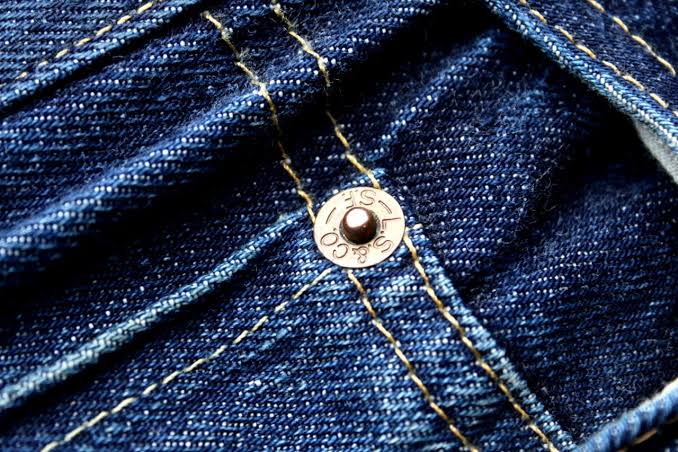
Today, jeans are a wardrobe staple worn by people around the world. Have you ever looked closely at your jeans and wondered why there are tiny metal dots near the pockets? These little pieces of metal might seem like a minor design detail, but they have an important purpose. But their tiny metal rivets have a practical history that dates back to the 19th century. So, why do jeans have these buttons, and what would happen if they were not there? Let’s find out. (Also read: Everyday explained: Why do train tracks have small stones around them? Know their purpose and importance )
The small metal pieces near the corners of jeans’ pockets are called rivets. These fasteners reinforce areas where fabric is more likely to tear. Pocket openings and corners experience repeated strain when people use their pockets. Over time, this pressure can weaken the stitching and damage the surrounding fabric. Rivets secure layers of fabric at these vulnerable points, reducing the risk of tearing. Copper rivets were used in the original riveted trousers developed in the 1870s, although modern jeans may use different metals and construction methods.
Rivets were introduced to address the problem of work trousers tearing around pockets and seams, according to Levi Strauss & Co.’s history of denim . Rivets reinforce areas of jeans that experience repeated pulling, particularly pocket corners and openings. They secure the fabric at these stress points, reducing the risk of tearing around the seams. This was especially useful for 19th-century workers, whose trousers needed to withstand demanding conditions. However, rivets cannot prevent all damage, as denim and stitching can still wear out over time. He developed a method of reinforcing work trousers with metal rivets to prevent pockets and seams from tearing. Davis approached Levi Strauss, a San Francisco-based dry-goods merchant who supplied his fabric. The patent helped establish the foundations of modern riveted jeans. Initially designed as durable workwear, these trousers eventually became a widely recognised clothing staple. Not all jeans have exposed metal rivets. Some manufacturers use concealed rivets, reinforced stitching or alternative construction methods. Exposed rivets on back pockets could also scratch furniture and saddles. This change reflects the need to balance durability with comfort and practicality. Rivets remain a useful way to reinforce pockets, but they are not essential to every pair of jeans. Modern manufacturers can also strengthen fabric using durable stitching and alternative construction techniques. Their continued use reflects both their practical purpose and their association with traditional denim design.
The two partnered to develop the product and received a United States patent on May 20, 1873, for their method of reinforcing trousers. The company began covering its back-pocket rivets in 1937 following customer complaints, according to Levi Strauss & Co.’s history of its pocket design. Originally developed to solve a durability problem, these small metal fasteners have become a distinctive feature of jeans for more than 150 years.
Because they could wear through the fabric, it eventually removed them from the back pockets by 1966.
The history of riveted jeans dates back to Jacob Davis, a tailor working in Reno, Nevada, in the early 1870s, according to Smithsonian Magazine .
