
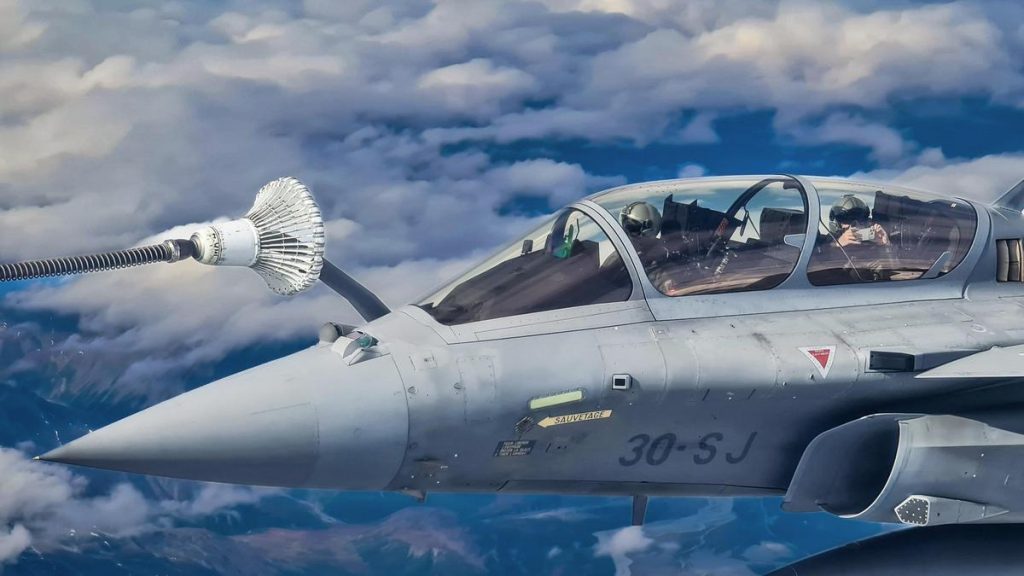
As part of Mission Pégase 26, the French Air and Space Force has deployed four Rafale F4 fighters, three A330 MRTT Phénix multi-role tanker transport aircraft and two A400M Atlas aircraft to Jodhpur for the second edition of the multinational air exercise Tarang Shakti.
The deployment is also aimed at strengthening France’s aerospace cooperation with strategic partners, including Japan, South Korea, Indonesia and India, while reinforcing its network of air support bases. Its return to the exercise comes amid expanding defence cooperation between New Delhi and Paris, including regular bilateral exercises such as Varuna, Garuda and Shakti. Lt. Gen. Dominique Tardif, Vice Chief of the French Air and Space Force, and Maj. Julien Sabéné, head of Mission Pégase, are scheduled to visit India and hold discussions with Indian armed forces authorities.
France had participated in the first edition of Tarang Shakti in 2024.
The French Embassy in New Delhi said the mission was intended to demonstrate the French Air and Space Force’s ability to rapidly project long-range air power across the globe and defend France’s overseas territories and strategic interests. French Ambassador to India Thierry Mathou said France regarded India as a “core strategic defence partner” and that participation in bilateral and multinational military exercises would contribute to greater operational coordination and interoperability. France, which describes itself as a resident power in the Indo-Pacific, said its participation in Tarang Shakti also reflected its commitment to regional and global security, international law and freedom of navigation in the region.
The French deployment, which arrived in Jodhpur on Friday, will participate in the Tarang Shakti air combat exercise hosted by the Indian Air Force from September 28 to October 12. Mission Pégase 26, the seventh edition of France’s long-range air projection exercise, is being conducted from September 8 to October 15. The mission involves around 300 personnel and is covering a 40,000-km route with nine stopovers, beginning in the Arctic and extending through the Pacific, East Asia and the Indian Ocean to the Near and Middle East.
The exercise is aimed at enhancing operational cooperation and interoperability between the participating air forces.
