
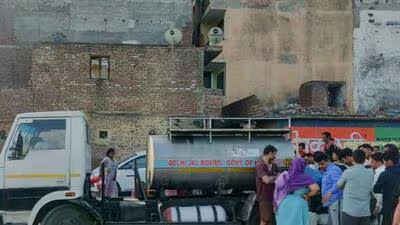
With Delhi facing a water supply deficit of around 250 million gallons per day (MGD) during summer, the Delhi Jal Board (DJB) is exploring advanced treatment technologies to tap into contaminated groundwater aquifers for supplying potable water, particularly in areas along the Najafgarh drain, Garhi Mandu and other areas where total dissolved solids (TDS), heavy metals and levels of other contaminants are significantly high.
The DJB has floated an expression of interest (EoI) inviting technology providers and research institutions to install and operate treatment systems capable of removing high concentrations of dissolved salts, heavy metals and other contaminants from groundwater extracted through tubewells. As part of the plan, the DJB proposes to establish treatment units on an available land parcel at the Ujwa underground reservoir (UGR), where around 20,000 square metres of land is vacant. The treated groundwater is proposed to be blended with the existing water supply of 1.40 million gallons per day at the Ujwa reservoir. DJB has invited proposals for treatment capacities ranging from 10 MGD to 50 MGD or more, with modular designs that can be scaled up.
Suggested technologies include high-recovery reverse osmosis and nanofiltration, although agencies may propose other proven solutions or a combination of technologies, DJB officials said.
“Besides removing dissolved salts and heavy metals, the treatment systems will be required to reduce water wastage, maximise recovery and provide a plan for managing the concentrated reject water generated during treatment”, the officials added.
