
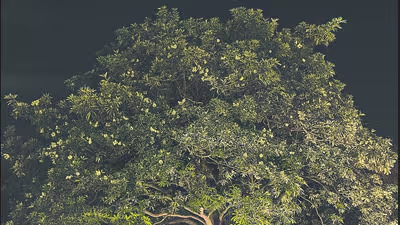
A city perfumed — that is what two weeks of October smell like now. Delhi has many smells: food, spices, streets, sewers. But in October all smells bow down to the olfactory invasion of the saptaparni — heady, sweet like cardamom, but allergenically heavy on the senses. It is polarising, dense and layered.
The first story, most often retold in South India, holds that a yakshi makes her home in the saptaparni. If any male villager gradually loses weight and health, an affair with a yakshi becomes the first suspicion in the minds of the elders.
Somewhere in Karnataka, a village still performs a ritual with the first moon of July, around the onset of the monsoon, the rains that leave most areas beset with diseases. Customarily, the head of the family approaches a saptaparni tree before dawn, seeks its permission to chop some pieces of bark, then heads home with the bark. The lady of the home makes a decoction of the bark and all the family members drink a few ounces. It has a terrible taste that some say is remembered the entire year. This yearly ritual is believed to be insurance against malaria. The saptaparni was a devil, a lover, a teacher and a cure without ever changing a leaf. The unexplained is first called dangerous and then, once studied, called useful, and women who knew things have been through both verdicts. Delhi’s trees wait on the same judgment, and this one now keeps the city’s time. It flowers between the rains and the smoke, half the street complaining and half drinking it in, and when the haze overtakes the scent, we know the last clean air has gone and the windows are shut, just in time for the taash season and Diwali celebrations.
Turning into a lovesick man, he lost all sight of health and time as carnal pleasures overtook his days entirely, slowly reducing himself to bones. The story is rather saucy. As it goes, one late afternoon, a Brahmin away from home was caught running late to reach his next destination. The sun at the horizon was setting steeply and he was rushing through a dense forest of saptaparni trees. A lady in white (typical), of ethereal beauty and sweet voice, scared to walk alone, called out to him to accompany her to her house. The Brahmin agreed. By the time they reached her house, it was dark, and she offered her home to him for the night. He did not question why the lady lived alone in a jungle, and stayed. That night became the most memorable of his life. Eventually, he died.
