
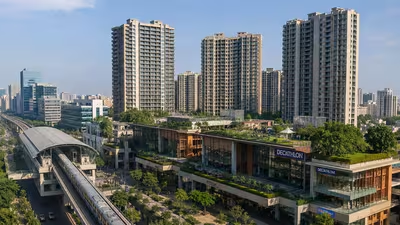
The Capital will grow through a two-pronged strategy of redeveloping existing built-up areas, and opening new urban extensions through planned development to accommodate a projected population of nearly 32 million people, according to Delhi’s 2047 Master Plan, which the Union government is likely to notify this week.
“Authorities need to keep in mind challenges related to water quality, security, ensuring adequate greening and public space network for reducing urban heat effect; priority for pedestrians and non-motorised transport users while developing road infrastructure and grounded measures towards better air quality.
Vertical growth is only possible if civic infrastructure is also accordingly developed,” said Prerna Mehta, associate director, urban development, WRI India.
The plan identifies Delhi’s ageing planned residential areas as a major source of additional housing capacity. These include cooperative housing societies, DDA colonies, plotted developments, resettlement colonies, rehabilitation colonies, government housing and private group housing. “The idea is to bring together smaller plots and build vertically with lanes and bylanes on the sides in both planned and unplanned areas, following all safety and building norms.
This is similar to the ‘blocks’ in residential areas in many other countries like the UK and USA,” said a DDA official.
