
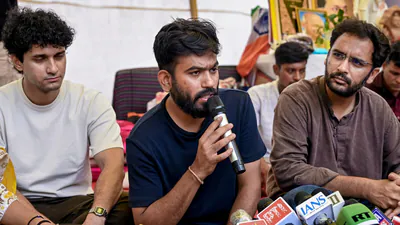
Cockroach Janta Party (CJP) spokesperson Ashutosh Ranka on Wednesday criticised the anti-paper leak amendment bill cleared by the Lok Sabha, saying that the proposed legislation focuses on punishing offenders after question papers are leaked instead of fixing the reasons behind such incidents.
Event Context
Following the NEET-UG row that forced Dharmendra Pradhan to resign as the Union education minister last week, the Lok Sabha passed the Public Examinations (Prevention of Unfair Means) Amendment Bill, 2026, this week.
The bill amends the existing anti-paper leak legislation by increasing the maximum punishment to 10 years in prison along with a fine of up to ₹50 lakh.
ALSO READ | ‘First of kind’ vs ‘showpiece amendment’: Fiery paper leak bill debate in Parliament
In a video message posted on X, CJP’s national spokesperson Ashutosh Ranka said the anti-paper leak amendment bill places too much focus on punishment after leaks happen instead of improving the examination process to stop such cases in the first place.
“You have been talking about everything after the paper leak, whether it is fast-track courts, harsher punishments or penalties. But you have not talked about what you are doing to stop paper leaks,” he said.
Instead, he called for the Centre to focus on reforms within the National Testing Agency (NTA), greater transparency in the examination schedule, calendar and syllabus, better monitoring of vendors, preventing blacklisted vendors from returning to the system, and carrying out physical and digital audits to prevent paper leaks.
“You will also have to talk about how to stop paper leaks. Look at our 5-pointer demand charter. Talk to students, academicians, experts, and digital and cyber experts. Don’t take hasty decisions because this is a question of the country’s children’s future,” he added.
Speaking about the bill, CJP founder Abhijeet Dipke said legal reforms alone would not be enough without improving the intent of those responsible for implementing them.
He also said that the first hearing in a fast-track court related to a paper leak case had to be postponed because a CBI counsel was not present.
The Public Examinations (Prevention of Unfair Means) Amendment Bill, 2026, proposing tougher penalties, was introduced in the Lok Sabha by Union minister Jitendra Singh on July 27, days after massive student protests led by the CJP took place across the country.
He said the amendment bill shows that the government is willing to learn from past experience and added that the number of suicides linked to paper leak cases has come down over the past few years.
Inside the anti-paper leak amendment bill
The amendments aim to strengthen the Public Examinations (Prevention of Unfair Means) Act, 2024, under which all offences are classified as cognisable, non-bailable and non-compoundable.
