
Samarpita Yashaswini is a Content Producer for Fashion (HT Shop Now) at Hindustan Times Digital. She has five years of experience in lifestyle writing, specialising in fashion, beauty, and trend-led commerce content. She covers everything from seasonal must-haves and wardrobe essentials to brand reviews and styling edits that make everyday dressing easier and more exciting. She began her writing journey in 2020, but her love for fashion started long before that. Over the years, she has interned with Times Internet and Desi Martini, and worked with Pinkvilla and Schbang, building a strong foundation in digital storytelling and audience-first content. At HT Digital, she writes and creates fashion affiliate content for both the website and social media, blending trend awareness with shopping practicality. Her work sits at the intersection of style and strategy combined with equal parts aesthetic and analytics. A self-confessed fashion enthusiast, Samarpita has a sharp eye for colours, prints, silhouettes, and textures. She notices the fall of a fabric, the mood of a palette, and the difference a good cut can make. Her expertise lies in translating trends into wearable, relatable style and helping readers shop smarter, not louder. She studied at Delhi Public School and graduated from Miranda House, University of Delhi in 2019, where she also wrote for the college magazine. She later completed a Postgraduate Diploma in Advertising and PR from MICA, Ahmedabad. Samarpita believes fashion content doesn’t need to be complicated or overly eloquent. It should be simple, fun, and genuinely helpful, guiding readers through daily style decisions with confidence and joy.

Event Context
Find the best EMI Offers
starts from
₹2,500/month
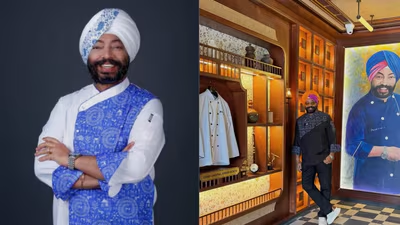
Chef Harpal Singh Sokhi has spent decades travelling across India, cooking in professional kitchens, hosting popular food shows and collecting recipes that often stay hidden within families and regional eateries. At Karigari, the chef-driven restaurant he conceptualised during the pandemic, those experiences come together in the most personal way. During a visit to Karigari in Noida, HT Shop Now sat down with the celebrity chef to talk about the inspiration behind the restaurant, the stories hidden in his menu, food trends, home cooking and the kitchen tools he believes every cook should own.
Q. Karigari is such an unusual name. What’s the story behind it?
Chef Harpal Singh Sokhi:
Karigari is our way of honouring the karigars of the country; not just chefs, but every artisan who creates something with skill. If you look around the restaurant, everything reflects that philosophy. The décor honours craftsmen; we celebrate traditional pottery makers, and across our restaurants you’ll even find dedicated walls celebrating artisans from different fields.
When we were conceptualising the restaurant during Covid, this word kept coming up in conversations with our founders and architects. Eventually, we realised that Karigari perfectly represented what we wanted to build: a space that celebrates craftsmanship.
Q. Many people call Karigari a modern Indian restaurant. Do you agree?
Chef Harpal Singh Sokhi:
Honestly, I don’t call it a modern Indian restaurant. For me, it’s an experiential restaurant.
Every dish here tells a story. Some recipes come from my mother’s kitchen, some from my father’s, some from my wife and mother-in-law. Others come from legendary restaurants I’ve visited during my travels or recipes I discovered while shooting my travel shows.
Of course, we’ve added little twists using international ingredients, but the soul remains Indian. The idea was never to modernise Indian food just for the sake of it; it was to create an emotional connection while keeping the flavours authentic.
Q. Your Paneer Margherita Tikka has become one of Karigari’s signature dishes. How did it come about?
Chef Harpal Singh Sokhi:
It actually came from conversations with homemakers. During cooking demonstrations, many mothers would tell me that their children only wanted pizzas and burgers whenever they went out to eat. They wanted something that had familiar flavours but was still Indian.
That’s when I thought, why not remove the pizza base altogether and create those flavours using paneer tikka? That’s how Paneer Margherita Tikka was born.
Today, it has become one of the highest-selling dishes across all our restaurants. We’ve sold lakhs of pieces over the years. It’s a perfect example of taking an Indian dish and giving it an international flavour without changing its identity.
Q. There are several unusual dishes on your menu. Which one surprises diners the most?
Chef Harpal Singh Sokhi:
Definitely the Green Chilli Halwa.
People are always shocked when they hear the name. They assume it’ll be unbearably spicy, but that’s not the case at all. It’s a traditional recipe from Rampur in Uttar Pradesh that was once made for royalty before slowly disappearing over time.
The process itself is very elaborate. We use a specific variety of green chillies, remove the seeds, process them carefully and then transform them into a halwa. You still taste the flavour of green chilli, but the heat only arrives a few seconds later.
An Ayurvedic doctor friend of mine once told me it works wonderfully as a digestive after a heavy meal. That’s one of my favourite compliments about the dish.
Q. Your menu also includes recipes from your own family. Why was that important?
Chef Harpal Singh Sokhi:
Because those recipes shaped my childhood.
Our Masoor Dal Roti comes from my mother’s kitchen. She used to pack it in my school tiffin. My father’s Punjabi-style meat curry is another recipe that I absolutely had to include.
Food isn’t just about ingredients. It’s about memories. When guests taste these dishes, I hope they remember someone from their own family too.
Q. You’ve travelled extensively. Where do your new ideas usually come from?
Chef Harpal Singh Sokhi:
Everywhere.
I learn from street vendors, legendary restaurants, home cooks, bakeries, local markets; you never know where inspiration will strike.
For example, I was consulting a restaurant in Hong Kong when someone introduced me to black bread made using black sesame paste. At that time, I was making charcoal naan using activated charcoal. After learning about black sesame, we replaced the charcoal with black sesame paste, making it both healthier and more flavourful.
Travelling keeps you curious. Every new place teaches you something.
Q. Is there a food trend you’re enjoying right now, and one you wish had never happened?
Chef Harpal Singh Sokhi:
(Laughs) I wish Fanta Maggi had never happened.
Fresh ginger, garlic and green chillies are always around too. They’re the backbone of Indian cooking.
Q. What’s one cooking mistake almost every home cook makes?
Chef Harpal Singh Sokhi:
Salt.
Everyone is scared of it, and rightly so.
Always season in moderation first and then adjust. You can add more salt later, but once you’ve added too much, there’s no easy fix. Masalas can be balanced, excess oil can be removed, but too much salt changes the entire personality of a dish.
Q. If someone is visiting Karigari for the first time, what should they absolutely order?
Chef Harpal Singh Sokhi:
Paneer Margherita Tikka, definitely.
I’d also recommend the Tomato Chaat, the Charcoal Naan, Green Chilli Halwa and our Dal Toka.
Personally though, my comfort food here is the black dal with methi and palak, paired with our roti. That’s something I always end up eating whenever I visit the restaurant.
Q. Before we wrap up, we noticed the beautiful design around your serving plates. Is there a story behind that too?
Chef Harpal Singh Sokhi:
There is, and it’s a very emotional one.
The design is dedicated to my mother. It traces her journey from Rawalpindi after Partition and incorporates traditional Punjabi Phulkari motifs. Every time I look at it, it reminds me of where our family came from.
That’s really what Karigari is about.
People often think restaurants are built around food. I don’t think so.
My restaurant is about stories. It’s about emotions. It’s about relationships.
People don’t come back only because the food tasted good. They come back because they remember how it made them feel. That’s what creates legacy restaurants. Great food matters, of course; but memories matter even more.
Stop slipping on court: 8 Indoor sports shoes to play your favourite sport in style
Balloon Pants: Fashion risk or the coolest trouser trend right now? 8 picks to rock this style
10 office tote bags that fit your laptop and daily essentials
Disclaimer: At Hindustan Times, we help you stay up-to-date with the latest trends and products. Hindustan Times has an affiliate partnership, so we may get a part of the revenue when you make a purchase. We shall not be liable for any claim under applicable laws, including but not limited to the Consumer Protection Act, 2019, with respect to the products. The products listed in this article are in no particular order of priority.
Team Analysis
But one trend I genuinely enjoy is how avocado has become part of Indian food culture. Think about it, there’s nothing traditionally Indian about avocado, yet today it’s available everywhere, from cafés to roadside vendors.
I also enjoy seeing Japanese ingredients like miso finding their way into Indian cooking. A miso chicken tikka, for example, creates beautiful umami flavours while still tasting familiar.
Innovation should happen, but only after understanding the original dish.
Q. For someone building their kitchen, what are the three tools worth investing in?
Chef Harpal Singh Sokhi:
A great chef’s knife comes first.
I recently visited Japan and bought two knives worth nearly a lakh because the craftsmanship is incredible. A good knife completely changes your cooking experience.
Second would be a thick wooden chopping board. I can’t work on those thin plastic boards. I like sturdy chopping blocks; they’re comfortable and durable.
Third is a powerful mixer grinder. Most people only think of grinding, but a good machine can also chop ingredients beautifully without releasing too much moisture. That makes a huge difference while preparing ginger, garlic and chillies.
Q. What are some ingredients you’ll always find in your kitchen?
Chef Harpal Singh Sokhi:
A good garam masala is non-negotiable because it completely changes a dish when used correctly.
The second thing is good-quality cooking oil. I always tell people not to compromise on oil quality or keep reheating the same oil again and again. It’s something many households overlook.
