
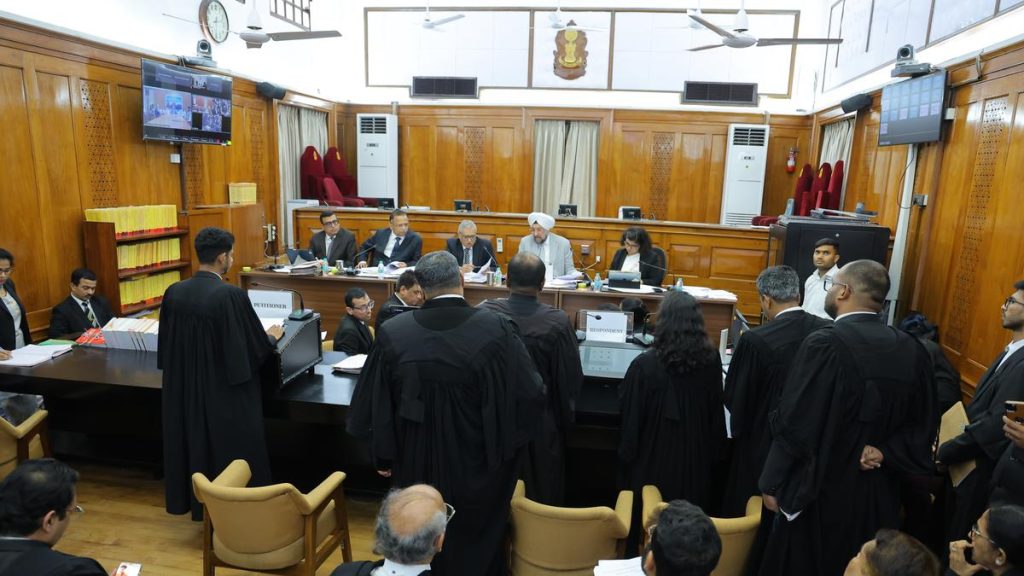
The success of the Supreme Court’s ‘Samadhan Samaroh’ initiative should not be judged merely by the number of cases settled, but by whether it helps institutionalise mediation as a continuous process, Supreme Court Judge Justice P.S.
Narasimha has said.
The Supreme Court of India is organising the ‘Supreme Court Action for Mediated Adjudication and Disputes Harmonization Across Nation’ to advance the vision of ‘participative justice’ and ‘doorstep delivery of justice’. “The essence of this resolution is informality.
That’s the big distinction between court cases and resolutions,” he said.
Because it gave the parties themselves the power to decide the dispute, justice Narasimha said mediation differed from regular court proceedings.
“The advantage of mediation is that the resolution is arrived at through a voluntary process of those who are involved in it,” he said. He said mediation could help litigants avoid the time, expense and uncertainty associated with prolonged litigation. Court cases were “long drawn”, expensive and uncertain, he said. He said the long-term objective was to build “institutional memory” and strengthen mediation within the working of the court.
