
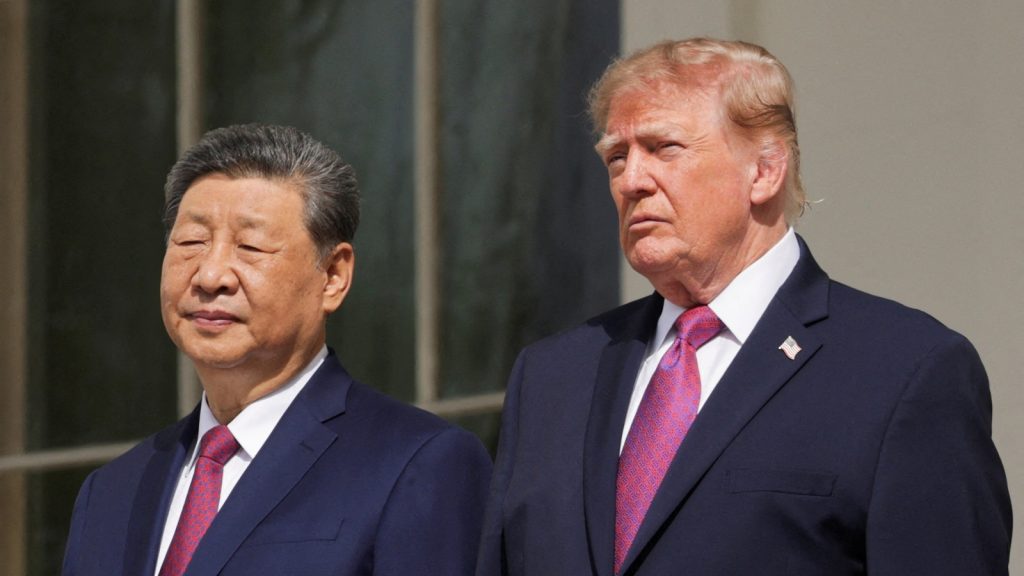
The warm gaiety and gala celebrations that marked Chinese President Xi Jinping’s US visit have come apart with remarks from US Ambassador to China David Perdue, who warned that the road ahead in the relationship would be “bumpy” and said America’s dependence on China for critical supplies was “unacceptable to America”.
The pomp and gala during Xi’s visit did not find resonance with Trump’s MAGA supporters and sent jitters down the spine of countries like Taiwan, Philippines and Indonesia, which have been at the receiving end of China’s expansionist policies in the South China Sea and beyond. Republican lawmakers, including prominent China hawks, publicly questioned the lavish welcome extended to Xi, with some raising concerns over the message it sent about US commitments in the Indo-Pacific.
Taiwan remains one of the most sensitive issues in the US-China relationship, with Beijing regarding the island as part of China and Washington maintaining its longstanding policy while continuing defence ties with Taipei. Iran was another issue discussed between Trump and Xi. The issue has particular significance amid the wider confrontation involving the US and Iran and China’s economic and strategic relationship with Tehran. The elaborate welcome for Xi and the public emphasis on cooperation may have suggested a thaw in relations. But the ambassador’s remarks indicate that the US continues to view its dependence on China in critical industries as a strategic vulnerability that needs to be addressed. In other words, the smiles, gala dinner and diplomatic warmth may have changed the tone of the relationship, but they have not erased the underlying competition. For India, this distinction is important. New Delhi has been closely watching whether the Trump-Xi engagement could result in a broader US-China accommodation that affects the strategic balance in the Indo-Pacific. The latest remarks from the US ambassador suggest that, despite the optics of a warmer relationship, Washington remains focused on reducing its dependence on Beijing and addressing unresolved strategic disagreements.
On Taiwan, Perdue has said there was no change in US policy, despite Beijing’s continued demand that Washington oppose Taiwan independence and reduce arms sales to Taipei. Perdue said Trump had made clear that Chinese assistance to Iran was unacceptable to Washington. The significance of Perdue’s comments lies not simply in his description of the relationship as “bumpy”, but in what that description says about Washington’s understanding of the summit. As Perdue put it, the US faces a “bumpy road” before it can regain independence in critical areas. His warning that such dependence is “unacceptable to America” offers a notably different picture from the celebratory tone that surrounded Xi’s visit.
HT had earlier reported that the summit was heavy on pomp and pageantry but produced limited substantive progress on the core strategic disagreements between the two countries. Because he is Washington’s ambassador to Beijing and has been closely involved in the administration’s engagement with China, the contrast with Perdue’s remarks is significant. His comments came days after Xi’s three-day US state visit, which was marked by elaborate ceremonies, a red-carpet welcome and a gala dinner. The visit projected an image of warmth between Xi and Trump after months of trade tensions and negotiations. But Perdue’s comments indicate that the pageantry should not be mistaken for an end to the underlying US-China rivalry. Beijing described the summit in considerably more positive terms. The Chinese readout also highlighted areas of cooperation, including artificial intelligence, trade and preparations for future multilateral meetings. Rather than suggesting that the US sees its China relationship as entering a new era of broad cooperation, Perdue’s comments point to an administration still focused on reducing its vulnerability to Beijing. Perdue’s warning centred particularly on China’s dominance of critical supply chains. The comments reflect one of the central concerns in the Trump administration’s approach to China: that Beijing’s dominance of strategically important supply chains gives it economic leverage over the US. Rare earths have emerged as a particularly sensitive issue. China controls a large share of global rare earth mining, processing and magnet production, making the materials crucial to industries ranging from defence and automobiles to electronics and renewable energy. The US has sought to diversify these supply chains as part of its broader effort to reduce economic dependence on China. Xi’s visit generated considerable diplomatic optics, with the Chinese president receiving a ceremonial welcome and attending high-profile events with Trump. The two leaders also reached understandings on several economic issues and agreed to continue dialogue. However, several of the fundamental disputes between Washington and Beijing remain unresolved. Trade tensions were eased, but questions surrounding Taiwan, technology, Iran and China’s broader military and economic ambitions remained. The two sides extended their trade truce, while Washington and Beijing also agreed to continue discussions on artificial intelligence and other areas. The agreements have helped create a mechanism for continued engagement, but they do not amount to a settlement of the broader US-China rivalry. Perdue’s other remarks have also suggested that the conversation between Trump and Xi was more complicated than the celebratory imagery surrounding the summit indicated.
“It’s going to be a bumpy road over the next year until we establish independence again on rare earth elements, magnets, pharmaceuticals, commercial shipbuilding, all the things that we have fallen into a single source dependency on with China, which is unacceptable to America,” Perdue said in remarks posted by the US Embassy in China on September 27. China said Xi and Trump had agreed to build a “constructive” China-US relationship of strategic stability based on “respect, fairness and reciprocity”. Xi said the two sides had added “new substance” to their relationship and described its future as bright, while acknowledging that differences and difficulties would remain. He said Washington wants to regain independence in sectors where the US has become heavily dependent on China, naming rare earth elements, magnets, pharmaceuticals and commercial shipbuilding. Perdue’s use of the phrase “single source dependency” is particularly notable. He said the US had allowed itself to become dependent on China in areas that are strategically important and that this situation was no longer acceptable.
