
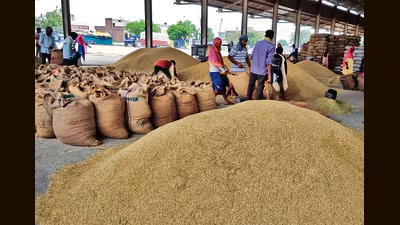
Farmers growing premium basmati paddy varieties in Haryana have reasons to cheer, with prices of the long-grained aromatic varieties crossing ₹ 5,000 per quintal in several grain markets, offering better returns to growers amid the ongoing harvesting season.
According to the reports from various mandis of the state the prices of premium basmati varieties like Pusa 1121 , Pusa 1718 and Moochal reached to around ₹ 5,500 per quintal as Pusa 1121 fetched a maximum price of ₹ 5,471 per quintal in Barwala mandi in Hisar district, while the maximum rate in Bapauli mandi in Panipat district stood at ₹ 5,391.
The higher prices have raised farmers’ expectations of improved returns from premium aromatic paddy varieties, which are largely sold in the open market rather than through the government’s minimum support price-based procurement system for common paddy. Haryana is among India’s major Basmati-producing states, with the Karnal, Kaithal, Kurukshetra, Panipat, Fatehabad and Yamunanagar belts accounting for significant cultivation and trading activity. Increased Gulf demand amid the Iran-US conflict has supported prices, although exporters continue to face freight and shipping-route risks.
It is for the first time since 2013-14 when the prices of Basmati varieties have reached beyond ₹ 5,000 per quintal. According to the All India Rice Exporters Association (AIREA) the basmati farmers in Punjab are receiving around 53% higher prices than last year.
“It is for the first time in my memories when the prices of Moochal variety has reached to ₹ 5,000 a quintal, I have sold my produce of five acres around ₹ 4,700 to ₹ 5,000 per quintal and earned more than ₹ 1.10 lakh per acre”, said a young farmer Ankush Sansarwal of Yamunanagar’s Radaur. “Basmati is an export-oriented crop, and changes in international demand, export policy, the availability of competing supplies and the pace of mandi arrivals can affect prices”, said a trader, Rampal.
