
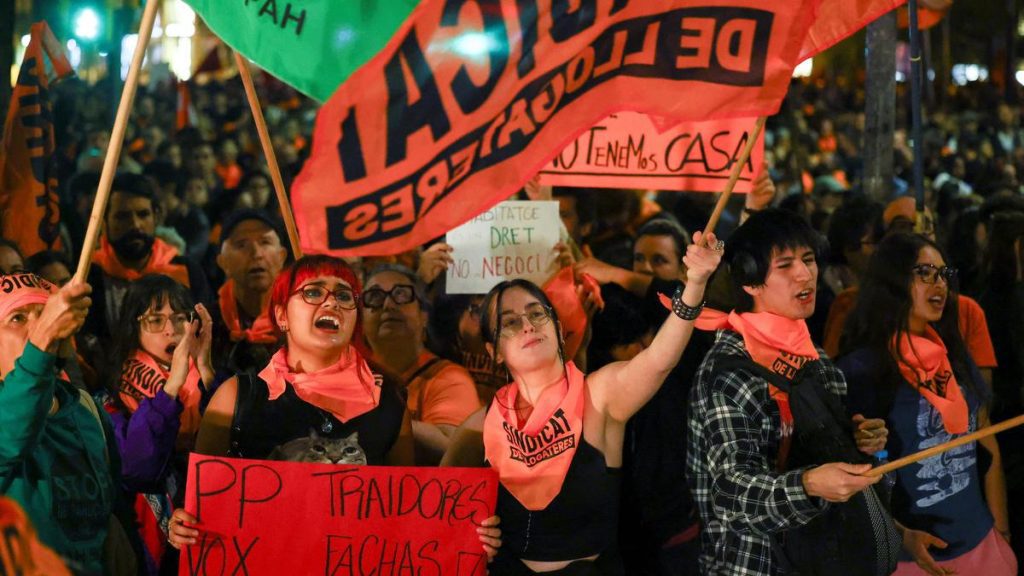
The story so far:
Her eviction sparked tens of thousands of people to protest nationwide over a housing crisis that is crippling the European nation. Hundreds of people set up tents in Madrid’s Puerta del Sol plaza, with some camping out there for over a week. They are demanding stronger protections for tenants, lower rents and a ban on investment funds buying property. Protesters say the problem is one of supply and demand — there simply are not enough affordable homes. Average incomes in recent years have failed to keep up with rising costs.
Rental costs have risen by an average of 84% over the last 10 years, according to property outlet Idealista. The southern city of Malaga has seen an increase of 113%, while Marbella’s increase was just under 150%. The average gross monthly salary in Spain is around 2,460 euros, according to the National Statistics Institute. In September, a 50-square-metre apartment in Madrid cost about 1,170 euros a month — about half the average income, according to Idealista. The Bank of Spain’s latest reports also estimate that the country has a housing shortfall of about 7,50,000 homes. The bank’s deputy governor, Soledad Núñez, said the housing deficit could increase by another 3,00,000 homes between 2026 and 2028, crossing the one-million mark.
How has the crisis shaken Sánchez’s government?
Investment funds are further exploiting the problem by buying whatever homes and units are available and hiking rents dramatically. As protests continue to swell, Sánchez presented two emergency measures to tackle the housing crisis, largely aimed at providing tenants with more protections. The defeat showed that Sánchez’s socialist government does not have congressional backing. Sánchez is hoping to capitalise on public anger over the housing crisis to win votes and maintain his position. His Spanish Socialist Workers’ Party is up against the far-right Vox party, the conservative People’s Party and the pro-independence Catalan party Junts.
Spain’s Ministry for Consumer Rights ordered the short-term rental platform Airbnb to remove about 66,000 unlicensed listings, but locals say it isn’t enough. Limited public housing is also worsening the situation, forcing many young adults to leave their parents’ homes only after turning 30 — far older than in other European countries. Spain ranks towards the bottom among countries in the Organisation for Economic Co-operation and Development in terms of government-owned rental properties, which account for less than 2% of the total housing stock. Madrid has only around 10,000 public housing units for its 3.5 million residents. On October 1, Spain’s Congress rejected both proposed decrees, prompting further protests. Following the blow, Sánchez called for a snap general election on November 29. If Vox wins, it would be the first time a far-right party has governed Spain since the death of dictator Francisco Franco in 1975.
Prime Minister Pedro Sánchez’s government calls them “vulture funds”.
The next general election was meant to be held before the end of next summer.
