
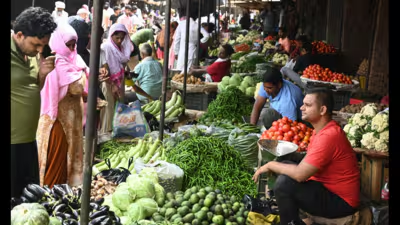
India’s food inflation surged to 7.74% in September from 5.97% in August, driven by a sharp spike in onion prices, rising ginger and garlic costs, and mounting risks to agricultural production from deficient rainfall. Economists warn the pressure could persist into 2027 if El Niño conditions intensify.
El Niño is a periodic warming of sea surface temperatures in the Eastern Pacific every two to seven years. The World Meteorological Organisation has warned this year’s El Niño may be stronger than anything since monitoring began and literally off the charts. The increase comes as India faces the prospect of a particularly strong El Niño that can weaken the monsoon. The country received its lowest June-September rainfall in more than a decade.
It can last up to 12 months and affect rainfall and temperature patterns. Onion prices more than doubled over the year, with inflation accelerating to 108.09% in September from 48.78% in August, according to National Statistics Office data released on Monday. Ginger inflation stood at 62.85%, garlic at 54.62% and lemon at 36.41%. The season’s rainfall was fourth-lowest since 2001 and 13th-lowest since 1901, as per India Meteorological Department data.
“We reckon that beyond oil-related input costs, adverse weather is adding to food-price pressures, with El Niño potentially persisting into 2027,” said Emkay Global Financial Services lead economist Madhavi Arora.
The Department of Consumer Affairs’ price-monitoring data point to pressure on household staples. On September 24, the average retail price of rice was ₹ 46.43 per kg, against ₹ 43.15 a year earlier. Tur dal cost ₹ 125.18 per kg, compared with ₹ 116.12, while packed groundnut oil was ₹ 210.04 per kg, against ₹ 188.53.
The next test for food prices will be whether the rainfall deficit affects yields and the transition to the rabi season, when farmers sow crops harvested in spring. She warned that bajra, tur, maize, groundnut, rice and soybean remain vulnerable in regions where rainfall deficits coincide with limited irrigation.
“Food inflation is likely to remain firm in the coming months as weak rainfall weighs on agricultural output,” Deshpande said.
