
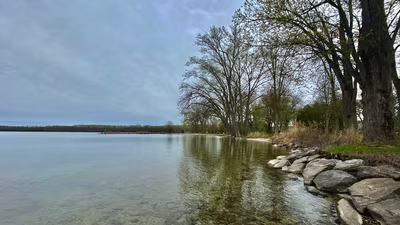
The swimming ban began in 1940, followed by a fishing ban in 1970. Fishing resumed in 1986 with certain consumption advisories, and today there are more than 65 fish species documented in Onondaga Lake. Imagine a lake so polluted that swimming and fishing were both prohibited. This was the case with Onondaga Lake in Central New York.
Beginning in the 1880s and continuing for more than a century, industrial activity introduced mercury, salt manufacturing waste, ammonia, organic pollutants, and PCBs into the lake, according to the DEC. Pollution, toxicity, and algal growth have declined, clarity has improved, and plant and animal diversity have shown significant progress. Water from the lake flows north into the Seneca River and eventually reaches Lake Ontario. The lake was a popular tourist destination during the 19th century, with beaches, resorts, and amusement parks in the vicinity. However, as the population grew and industrial development expanded, the volume of industrial effluents and municipal sewage entering the lake increased. Sewage created another major environmental problem. Effluent containing ammonia and phosphorus from the Metropolitan Syracuse Wastewater Treatment Plant contributed to fish migration and reproduction problems, algal blooms, turbidity, and low oxygen levels in the lake. During storms, Syracuse’s combined sewer system also overflowed, sending stormwater and sewage into the lake’s tributaries. These overflows can carry pathogens, garbage, and sand into the waterways.
The New York State Department of Environmental Conservation’s Onondaga Lake overview describes the water as the cleanest it has been in more than 100 years. The lake runs along the border of Syracuse, occupying 4.6 square miles with an average depth of 35 feet and a maximum depth of 63 feet. Most of its 285-square-mile watershed is within Onondaga County. Two major tributaries, Nine Mile Creek and Onondaga Creek, provide about 70% of the annual inflow. Another 20% comes from the Metropolitan Syracuse Wastewater Treatment Plant, while the remaining inflow comes from other sources, including smaller tributaries and direct runoff.
The DEC says the lake’s recovery has exceeded the expectations of many.
Onondaga County is responsible for implementing the requirements of the consent decree and complying with the Clean Water Act. Dredging of the lake bottom has also been completed. Industrial cleanup has followed a separate track. Under enforcement agreements with New York state, the parties responsible for the pollution are required to investigate and fund long-term remediation at affected sites. Honeywell, which merged with AlliedSignal and whose predecessors included the Solvay Process Company, has played a major role in the cleanup. Projects at upland sites and along tributaries continue to move through design, implementation, and completion. A separate natural resource damage assessment, coordinated by the DEC and the U.S. Department of the Interior, evaluates injuries to natural resources from the contamination and guides restoration projects intended to compensate for those losses. Polluted runoff is a third source of contamination, and addressing it involves activities throughout the watershed. Stormwater can carry sediment from the Tully Valley mudboils, road salt, fertilizers, pesticides, animal waste, and street debris into the lake and its tributaries. Responses include vacuum trucks that clear catch basins, skimmer vessels that remove floating waste from the Inner Harbor, agricultural programs addressing animal waste and pesticide use, and initiatives to reduce mudboil sediment entering Onondaga Creek. Some solutions start at home. Phosphorus-free fertilizers are in wider use, and the DEC emphasizes that everyone who lives, works, or plays in the watershed has a role in protecting the lake. For anyone tending a lawn or garden, that is a reminder that what goes onto the grass can eventually reach nearby waterways. The lake is once again attracting visitors for outdoor recreation and has become a source of pride for the local community. Significant work remains, but the transformation has already changed the way the lake is viewed.
Cleanup efforts began in the 1970s, and a 1989 consent decree required upgrades to the wastewater treatment plant and collection system. By 2014, the county had completed 169 green infrastructure projects and abated 46 of the 72 combined sewer overflows that existed before the consent decree.
