
One such instance recently arose over the Mines and Minerals (Development and Regulation) Amendment Act, 2026, passed by Parliament. In a federal country like India, differences between the Centre and the States over certain issues are not unusual.
Under the amended Act, the Centre’s regulatory powers over mining have been expanded to cover not only mines and mineral development but also mineral-bearing lands. It bars States from imposing fresh taxes on mineral rights and mineral-bearing lands, except under conditions prescribed by the Union government. Mines and minerals are a subject over which legislative powers are divided between the Centre and the States. The latter entry gives Parliament the discretion to determine the extent of authority over mining regulation and development in the public interest. The recent amendment draws on the Centre’s regulatory authority over mineral development to place new limits on these State-level taxing powers. So, the issue widens from mining regulation to the fiscal autonomy of mineral-rich States. The Centre has argued that uneven and multiple State-level taxes raise the cost of domestic minerals, prompting industries to turn to imports and placing an additional burden on the exchequer. By invalidating unrecovered past dues, the law hits at the potential source of revenue for States, narrowing the prospective mineral-related revenue for some of the major mineral-bearing States. The response of other States also reflects this political variation. Telangana, Himachal Pradesh and Kerala are planning to challenge the law in the Supreme Court, arguing that the restrictions on State taxation of mineral rights and mineral-bearing land undermine States’ fiscal powers and federalism, Kerala has additionally argued that treating mineral-bearing land in this manner gives the Centre wider powers over areas such as the State’s coastal and forest regions While Karnataka. By contrast, there has been no comparable State government challenge from States such as Madhya Pradesh, Rajasthan or Chhattisgarh so far. The evolving Indian federal dynamic is marked by push and pull between the central authority and States’ autonomy. Conflicts between the Centre and the States over legislative jurisdiction, fiscal resources, administrative control, and even foreign policy engagements have surfaced time and again, be it over the GST compensation, the terms of reference for Finance Commissions, the National Education Policy, the Citizenship Amendment Act, and proposed amendments to All-India Services rules, to list a few.
State governments are empowered to regulate mines and minerals under entry 23 of the State List, but this power is subject to central legislation as per entry 54 of the Union List. The Constitution also gives States powers to tax mineral rights and land through entries 50 and 49 of the State List. The amended provisions contradict the constitutional position articulated by the Supreme Court in 2024. The court held that States can tax mineral rights, subject to Parliament’s power to limit this in the public interest, while their power to tax mineral-bearing land cannot be curtailed through Parliament’s powers under Entry 54.
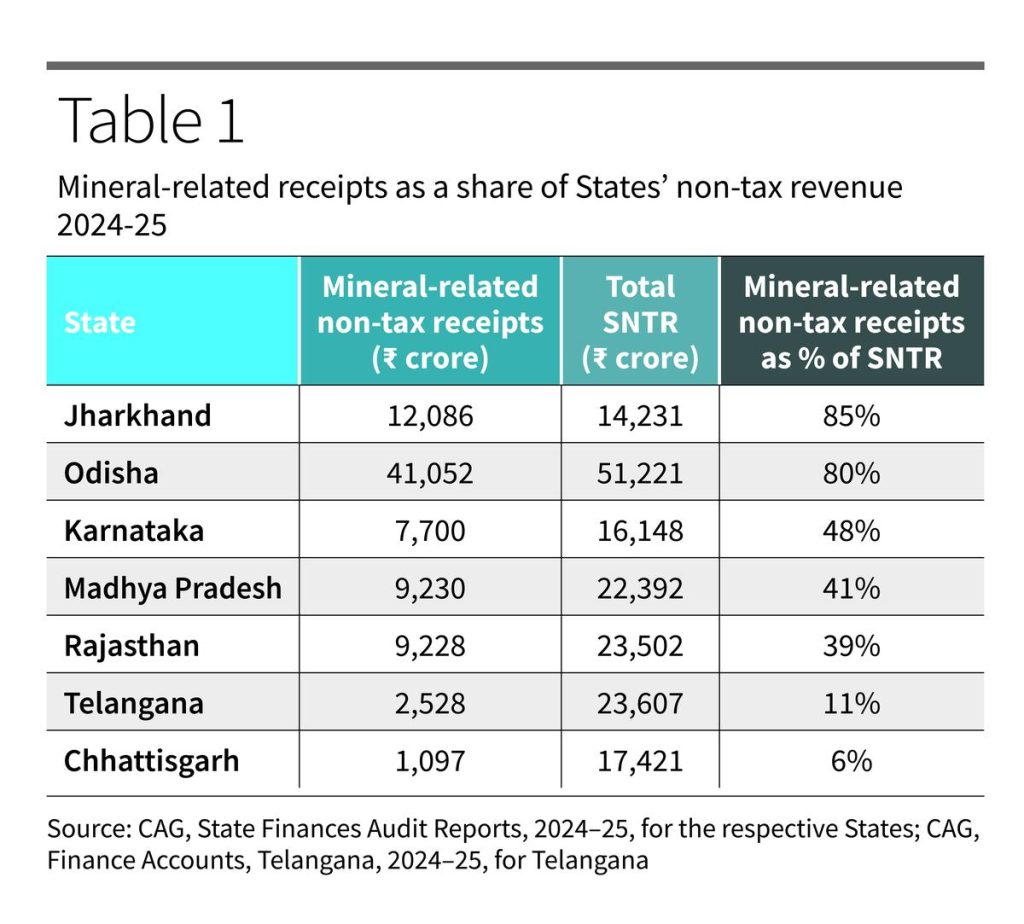
Because the amended Act renders certain uncollected past dues invalid, jharkhand has also raised objections, with the Chief Minister Hemant Soren warning that the loss of revenue from mineral taxes could affect social-security schemes benefiting millions. This amendment therefore adds another fault line to India’s continuing Centre-State contest over legislative authority and fiscal autonomy.
It also cancels mineral taxes imposed by States but not fully collected before the Act came into force.
Odisha is particularly revealing in this regard. Despite deriving a substantial share of its non-tax revenue from minerals, the State has not responded with a unified government position. The Opposition Biju Janata Dal has strongly criticised the legislation and demanded a special Assembly session. The BJP-led State government, however, has rejected the demand and argued that the amendment would not harm Odisha’s mineral revenues.
Telangana, where mineral receipts account for only about 11% of non-tax revenue, has also joined other non-NDA-ruled States intending to move the Supreme Court against the amendment.
