
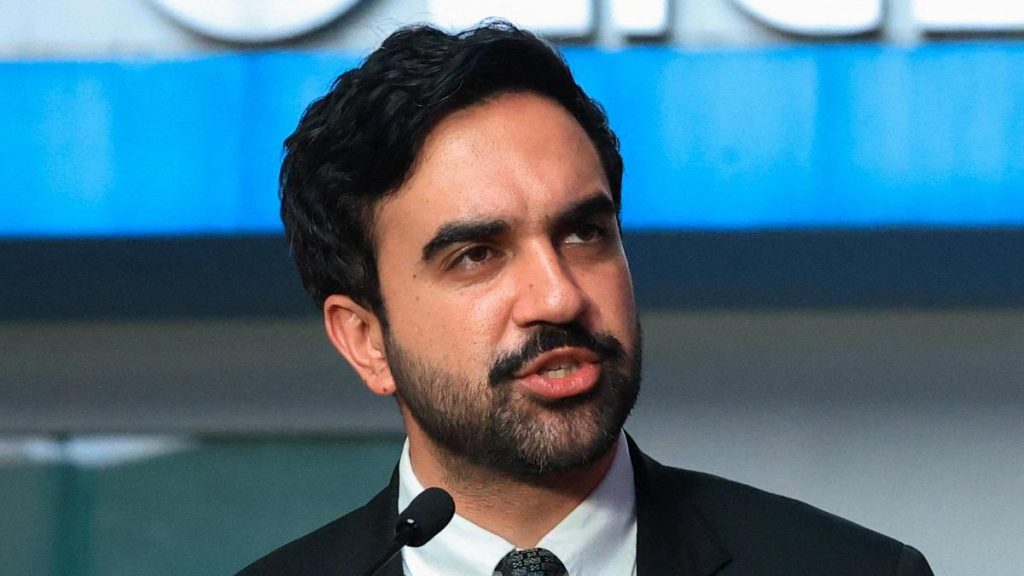
But once that child becomes 16, that knowledge becomes something they are mature enough to learn,” stressed New York’s Mayor Zohran Mamdani, while announcing a one-year moratorium on AI tools for students. “A six-year-old child is too young to slice an onion, to fry an egg or to use a stove safely.
It has announced an AI curriculum across public and private schools covering areas such as data, algorithms, applications, risks and ethical use. How are other parts of the world dealing with a similar dilemma? The United Arab Emirates is moving towards more structured AI education, rather than a moratorium. Norway has adopted a more cautious approach. Australia has taken another route: a national framework for responsible and ethical use of generative AI in schools, rather than a blanket prohibition. The European Union, meanwhile, has sought to regulate high-risk uses of AI. Under the EU AI Act, certain systems used in education — including those involved in evaluating learning outcomes or determining access to education — can fall into the high-risk category. The legislation does not amount to a general ban on generative AI in schools. And where does India stand? India is closer to the integration camp.
It also plans to train about 22,000 educators in using AI for teaching, assessment, curriculum analysis and lesson planning. Its education authorities have recommended that pupils in grades one to seven should not be given access to generative AI, while students in eight to 10 should be introduced to it gradually. The National Education Policy (NEP) 2020 identifies artificial intelligence and other emerging technologies as important to India’s changing educational and employment landscape, and calls for contemporary subjects such as AI to be introduced at appropriate stages, alongside greater emphasis on computational thinking.
The Central Board of Secondary Education (CBSE) introduced Artificial Intelligence as an optional sixth subject in Class IX from the 2019-20 academic session. More recently, for 2026-27, CBSE launched a dedicated Computational Thinking and Artificial Intelligence curriculum for Classes III to VIII, with AI and allied-subject curricula for Classes IX to XII also finalised. The curriculum emphasises logical reasoning, pattern recognition, algorithm design, data literacy and responsible and ethical AI use.
Five limited AI pilots will also operate throughout the year for high school classrooms. Research supports a cautious stance. Samuels on September 2 imposed a one-year moratorium on student-facing generative AI for pupils up to eighth grade for the 2026–27 academic year. These select tools are Quill (15 minutes per week) for English language arts; Edia (20 minutes per week) for mathematics; Brisk Teaching (10 to 20 minutes once or twice weekly) for teacher-created activities; Playlab (two assignments per marking period; 45 minutes per week) for assignment-specific applications; and Intel AI-Ready Schools (one period per week) to assist students in identifying community issues and developing solutions through term-long projects. A 2026 CEPR discussion paper by researchers at Stockholm University and the University of Hong Kong examined more than 26,000 students in China over 30 months. They found that access to generative AI increased homework scores by 18% and reduced completion time by 30%. However, after roughly six months, the same students’ closed-book examination scores had fallen by 20%. A broader review by the Brookings Institution’s Centre for Universal Education, analysing over 400 studies and interviews with 500 educators and pupils across 50 countries, concluded that the potential harms of generative AI in primary and secondary education currently outweigh the benefits—though tailored applications with proper safeguards can enrich learning.
In what has been described as one of “the most expansive student-facing AI policies in the country”, the Mayor and Schools Chancellor Kamar H.
