
Tribal communities in Madhya Pradesh’s Dindori district have earned nearly ₹42 lakh between June and July 30 by collecting more than 2.1 million sal borer beetles under a forest department drive to contain a major infestation threatening sal forests, forest officials aware of the matter said.
Event Context
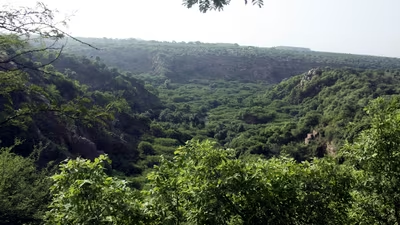
Villagers are being paid ₹2 per beetle under the ongoing trap tree operation, aimed at reducing the adult beetle population before it spreads further, they said. More than 400 to 500 tribal families participated in the initiative. The infestation has affected more than 1.47 lakh sal trees across nearly 30,000 hectares of forest in Dindori, covering the East Karanjia, West Karanjia, South Samnapur and Bajag ranges. Forest officials said the affected trees are at different stages of infestation, with some severely damaged and unlikely to recover.
Villagers collect beetles from specially prepared trap trees and submit them to the forest department, often stringing them into garlands before handing them over. Officials said all collected beetles will later be scientifically destroyed under expert supervision to prevent further breeding.
Also read: MP to procure 60% of green gram from each farmer after protests
“We have sought permission from the Union forest and environment ministry to fell more than 1.47 lakh trees to contain the epidemic. This accounts for 15% of the district’s sal forests,” said Subhranjan Sen, principal chief conservator of forests (PCCF). Officials said felling heavily infested trees can help reduce breeding sites and slow the spread of the pest.
The proposed trees for felling are all infected, they said.
source
According to experts, sal borer outbreak has returned after nearly three decades. Between 1996 and 2001, the pest destroyed around 3.5 lakh trees across three districts. Forest officials detected the current outbreak in December.
Also read: Ken-Betwa project protests explained: Behind ‘chita’ and ‘faansi’ demonstrations in Madhya Pradesh
“Heavy rainfall last year raised moisture levels to nearly 90% in the Dindori–Amarkantak region, accelerating the spread. Beetles are drawn to sap oozing from wounds, laying eggs there and hollowing trees from within,” said Dr C Mohan, senior scientist at the Tropical Forest Research Institute (TFRI), Jabalpur.
