
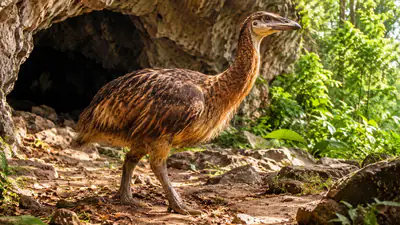
The extinct bird, estimated to have weighed around 3.9 kg (8.6 pounds), was considerably larger than its living relatives.
A fossil discovered in an Indonesian cave has helped researchers identify a previously unknown species of giant prehistoric bird related to modern chickens.
Named Megapodius rokusi, the bird was identified from a fossilised leg bone recovered from Liang Bua cave on the Indonesian island of Flores. The discovery adds to what scientists know about the ancient wildlife that once inhabited Flores. The discovery marks the first time a fossil megapode has been described from Wallacea, a group of islands located between mainland Asia and Australia. It also suggests that the region was once home to a wider variety of these birds. Researchers named the species after Indonesian zooarchaeologist Rokus Due Awe, who studied animal remains recovered from Liang Bua. He also played an important role in identifying human bones and teeth that contributed to the discovery of Homo floresiensis, the small-bodied ancient human relative popularly known as the ‘hobbit’. Scientists still have several unanswered questions about the bird. Since only part of its leg bone has been recovered, they cannot establish whether it could fly. The researchers have suggested that the bird’s eggs may have provided food for ancient humans on the island. However, there is no direct evidence that Homo floresiensis ate the eggs of this particular species.
The bone was discovered in 2009 but has only now been identified as belonging to a previously unknown species, according to a report by PEOPLE . The research was published in October 2026 in the journal Alcheringa. The findings were published in the research paper A new species of megapode (Galliformes: Megapodiidae) from the Pleistocene of Liang Bua, Flores in Alcheringa on October 22, 2026.
They also do not know when it became extinct or whether it lived alongside the smaller megapodes found on Flores today.
