
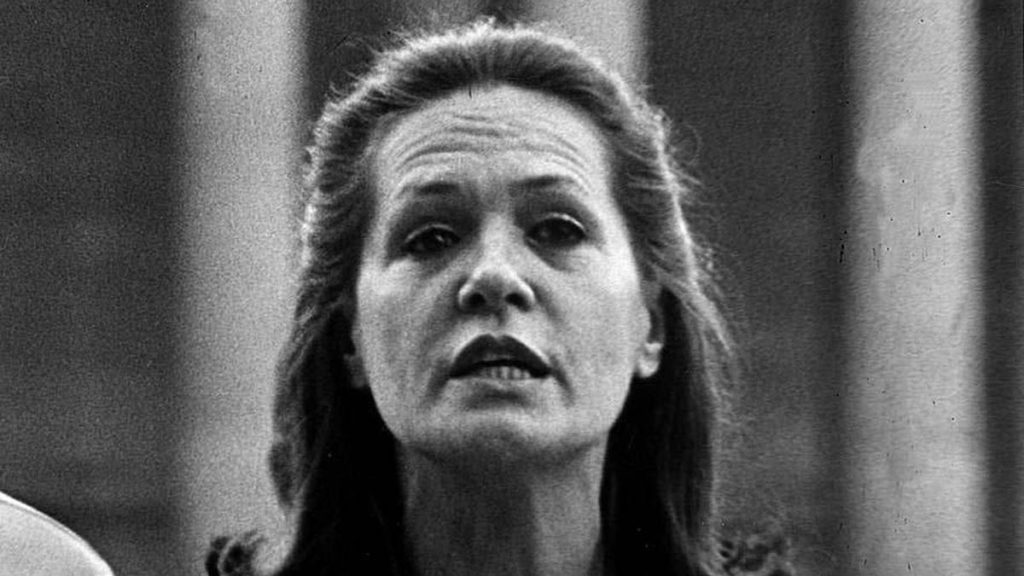
In this wide-ranging interview to The Hindu on her soon-to-be-launched book, Belonging: A Journey of Love , published by HarperCollins India, Sonia Gandhi responds in writing to a number of questions, personal, historical, and political, raised by N. Ram.
Gandhi herself who came to recognise what was happening and called for the March 1977 election. It was only after the Emergency that I came to know the true gravity of what had been happening. Yes, democratic rights had been curtailed and there was a suspension of habeas corpus, but it was done constitutionally. Yet, when I take myself back to that period and try and see it from Mrs. Gandhi’s point of view, I see her struggling to cope with the rapidly deteriorating prevailing circumstances: violent protests, government offices and public transport set on fire, widespread organised unrest and even a call for the bureaucracy and armed forces to disobey orders. Hindsight allows us to put things better in perspective. Let’s not forget that it was Mrs. And you know very well that she herself later publicly expressed regret and apologised for excesses during the Emergency. Some of the most interesting and insightful passages in your book concern the RSS, the BJP, and the Sangh Parivar, and the dangers they pose to India’s society and polity, particularly to the constitutional values of democracy, secularism, and fraternity. On Prime Minister Narendra Modi, you write that you and he come from different ideological worlds and have very different ideas of India. Yet you also recognise something of his discomfort with the ruling elite. In a striking passage in the book, you recall feeling ill at ease in Delhi drawing rooms, where political opinions seemed ‘very far removed from the reality of India. The suffering and struggle to survive that you had witnessed in your constituency and across the country seemed unimaginable to this privileged group. You also observe that, although Modi’s humble origins may have been exaggerated by his PR team, he “had certainly worked his way to power within the RSS from an underprivileged world. What political lessons should the Congress draw from this? It’s true that he comes from a very different ideological world. But there are many ways that people succeed in politics – within the Congress party, take for example Dr. Manmohan Singh and Congress President Mallikarjun Kharge. I don’t think we have much to learn from the RSS. You record your sense of hurt over Congress leaders Sharad Pawar, P.A. Sangma, and Tariq Anwar raising the issue of your foreign origin and asserting that you could not hold high office in India. ‘I felt tears welling up and walked out of the meeting. I hadn’t entered politics to grab position and power. It was some of these colleagues who had urged me to join politics, and now they were turning on me…It wasn’t the issue of holding office that hurt me; it was that my loyalty to India was being questioned. You submitted your resignation as Congress President, but you were persuaded by party leaders to continue. Did this episode steel your resolve not to accept the prime ministership should the opportunity arise?
The subjects covered include how she came to write her story about belonging; the values she grew up with and came to learn and cherish in India; what she learnt from Rajiv Gandhi and Indira Gandhi and how they shaped her life and outlook; the “great damage … done to the fabric of our country, our democracy and our institutions” by the BJP-RSS dispensation; how she viewed, and now looks back on, the Emergency of 1975-1977; the major political decisions she made to accept the office of Congress President in 1998 and to continue in it, after a challenge by some colleagues, in 1999, and in 2004 to decline the offer to become Prime Minister; the current political situation and the prospects of the Congress and its coalition partners; and the change of publisher in India just weeks before the book’s launch.
Do you think the Congress Party, historically and in recent times, has differentiated itself clearly, consistently, and effectively from the RSS-led Hindutva forces on these fundamental issues that matter so deeply to you?
Chapter Thirty is, arguably, the most interesting chapter politically, and one of the most moving personally. Rahul and Priyanka were strongly opposed, haunted by the assassinations of their grandmother and father and convinced that the office carried exceptional danger. Yet, amid the ‘surreal drama’ of party leaders pressing you to accept, you relented with a ‘Theek hai’, only to change your mind. Dr. Manmohan Singh became Prime Minister instead. Do you ever wonder how UPA policies and Congress strategy might have differed had you accepted? Singh and most Congress leaders, then and now. You make it clear in the Epilogue that you have no regrets in your personal life over coming to India and making your life here with the family you married into. You also strike a hopeful note when you observe that when you joined the Congress Party and became its President, you discovered that ‘individuals have untapped reserves that come into play when life calls them to perform tasks they had thought unimaginable. However, you write that where you struggled with doubts was when you were called upon to make political compromises. ‘I ask myself now,’ you write, ‘did those compromises even serve their objectives? Not always. Even when they seemed to favour the party, I couldn’t rejoice, deep down. They still don’t sit lightly on my conscience. What were these compromises? Could you give us a couple of examples?
It offers new insights into your decision not to become Prime Minister after the Congress-led victory in 2004, when virtually everyone expected you to take office. Because you are widely seen as more of a social democrat than Dr, i ask.
Months before the general election, you had told one of your children, “Absolutely not,” when asked whether you would accept the post should the Congress pull off a win.
