
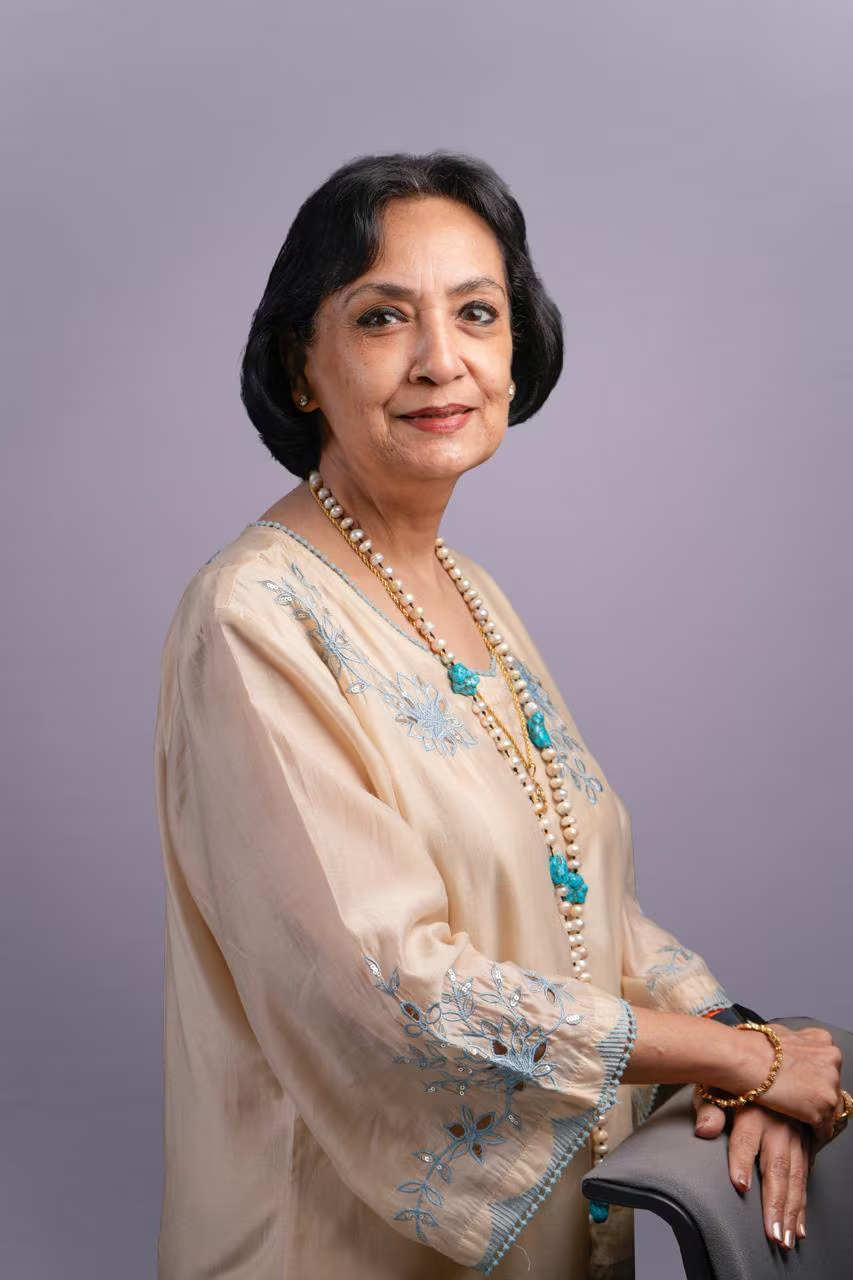
When Ambassador Monica Mohta finished her tenure in the Indian Foreign Service, she thought she would put her feet up and relax, or do things she had been unable to during her whirlwind career. Having spent most of her life abroad and heading missions—be it in Poland, Switzerland and Sweden—it was time to explore the country she was born and brought up in; a country wherein she grew up and one where she had been instilled a value system which weaved in tradition and culture; a country which she belongs to: India.
But could this be without a purpose? Perhaps not.
“I would,” she said to herself, “travel and explore every nook and corner, seep in the smell of the soil and soak in its monsoons: all that I had missed in my working years.
As she travelled the length and breadth of the country, she also decided to take India’s cultural story to the world and create a platform that bring the country’s history, art and living traditions into conversations with the world. Thus was born Sopaan, a cultural initiative that has helped create meaningful cultural connections with India through carefully curated experiences in some of the country’s most evocative settings. Its USP: bring India to the world but do it in India and from India. Simply put, this meant bringing heads of missions to historical places and bringing those places alive through contemporary cultural experiences. Drawing upon her experience as a diplomat and former Ambassador in several countries, Mohta firmly believes that international relations can be meaningfully pursued through the lens of culture. And what better way to do this than through Ambassadors and diplomats posted here in India? “At a time when conflict, divisions and uncertainty dominate much of the international discourse, Sopaan aspires to build bridges of friendship, understanding and trust through the universal language of culture. Its annual flagship initiative, Aikyam — another Sanskrit word, meaning ‘oneness’ — embodies this philosophy: bringing people, artistic traditions and civilisations together. Our purpose is not limited to merely showcasing India’s cultural wealth but use it as a bridge between India and the world, creating meaningful international confluences that go beyond conventional cultural presentations and leave behind lasting relationships. More importantly we continue the work of international engagement through the instrument of diplomacy—the transformative power of culture,” explains Mohta. And how do they do this? But not until she explains the essence of the word Sopaan. “For us, it is to create cross-cultural dialogue in an Indian setting, bringing Indian and international artists together on a common platform to collaborate and create shared artistic expressions. We do this through performing arts, music, dance, theatre, fine arts, literary conversations and cultural dialogues, these encounters celebrate both the distinctiveness of individual cultures and the universal values that connect them. The experiences extend well beyond the stage, encompassing curated heritage walks and tours, culinary journeys, theatrical presentations, conversations on art, architecture and design, and meaningful engagement with local communities, craftspeople, weavers, textiles and indigenous traditions. Each initiative is designed as an immersive cultural journey, where the heritage setting itself becomes an integral part of the experience, and where international and Indian participants encounter one another not as spectators of different cultures, but as collaborators in a shared celebration of creativity, heritage and humanity,” she adds. But why Gujarat? Ask Mohta and she is happy to explain: “Vadodara itself is an important industrial and engineering centre, while retaining a rich artistic and architectural identity. Vadodara, often regarded as Gujarat’s cultural capital, offered a particularly fitting setting. The city’s cultural identity is closely associated with the Gaekwad dynasty, whose patronage helped shape its artistic, educational and architectural landscape. His association with Raja Ravi Varma, one of India’s most influential painters, provided a natural starting point for the festival’s exploration of artistic exchange.
Attended by 150 international delegates, including ambassadors and envoys from more than 30 countries, the weekend involved conversations on art, showcased works by Raja Ravi Varma, and experienced the architectural splendour of Vadodara’s Lukshmi Vilas Palace, completed in 1890, which remains a landmark of the city’s royal legacy. Maharaja Sayajirao Gaekwad III, who ruled for 64 years until 1939, was a major patron of the arts and supported institutions that contributed to the city’s cultural development.
By taking diplomats, Ambassadors and mission heads stationed here to India’s extraordinary places of history and heritage and transform these settings into vibrant meeting grounds for cross-cultural exchange: “We curate an unforgettable experience and attempt to position India’s historic cities, monuments, heritage properties and cultural landscapes as compelling global destinations, inviting audiences from across the world to discover the richness of India’s civilisational legacy and living traditions” says Mohta . “It is a Sanskrit word meaning ‘a stairway to heaven’; it represents an aspiration to elevate human understanding through cultural engagement,” she says. Recently, this initiative brought Gujarat alive: a travelling festival called “Rasa & Realism”, exploring the relationship between Indian and European artistic traditions through the region’s royal history, architecture, visual arts and living culture.
Ahmedabad, meanwhile, is central to India’s ambition to host the 2036 Olympic and Paralympic Games, with the city proposed as the host location. The International Olympic Committee is expected to decide on the host in 2029. In doing so, Sopaan is not simply presenting India’s past; it is creating new contexts in which the country’s cultural story can continue to be experienced, interpreted and shared,” says Mohta, who brings to the table an entirely new and different perspective, shaped by more than 36 years in the Indian Foreign Service.
Another component of this experience was a peep into the city’s living royal traditions where royalty played hosts to the delegates. For a diametrically contrasting experience, a visit to an akhara also formed part of the weekend to give delegates an idea of the cultural practices of the state. “The larger purpose is to create encounters that allow international audiences to engage with India beyond the familiar, while enabling Indian artists, traditions and cultural institutions to connect with the world.
“These developments are bringing renewed global attention to Gujarat and its cities, creating opportunities to showcase their cultural as well as economic strengths,” says Mohta.
