
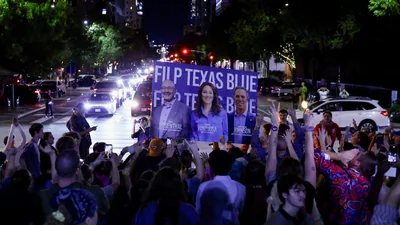
Though she had spent months telling voters that a Democrat could win the governorship, she clearly hadn’t believed it. Pundits had reckoned James Talarico, the Democratic Senate candidate, could win narrowly. At a watch party for him on election night, staffers refreshed early-voting results pages, wondering if stellar numbers were a glitch. Republicans had outspent them more than two to one.
“EVERYTHING IS BIGGER in Texas, including the shock of this win,” Gina Hinojosa said in her victory speech on November 3rd. By midnight, bleary-eyed Texans in “Talafreako” shirts flooded downtown Austin cheering in disbelief: Democrats had swept Texas, winning the Senate seat by 12 points, replacing every Republican statewide official on the ballot, picking up one congressional seat and flipping the Texas House.
What will Texas Democrats do with their new power? Kendall Scudder, the state Democratic Party chairman, insists Texas Democrats are different from their national counterparts. Asked whether the party would prioritise rolling back social policies, such as Texas’s strict abortion ban, he didn’t respond directly. Ms Hinojosa’s defeat of Greg Abbott, a three-term governor, was even more of a surprise than Democrats’ victories in Congress. Constraints on her power within the state remain. Nor can Ms Hinojosa reshape the courts. Seven of the state’s nine supreme court justices were appointed by Mr Abbott. Nathan Johnson, the incoming attorney-general, may join other blue states—still a surreal phrase—in suing the Trump administration. The immediate task for Democrats is staffing up.
State agencies, university boards and policy commissions are staffed by some 2,500 bureaucrats, many of whom serve six-year terms and none of whom the governor can sack. The party’s other priorities include anti-corruption legislation and cutting property taxes; those levies rose by 86% during Mr Abbott’s tenure. Texas has the country’s highest rate of uninsured citizens; less money for rural health care is due to force hospital closures across the state.
“A lot of us really believe that the government should provide you with positive services, be fair to everybody and get the hell out of your lives,” he told The Economist the morning after the election. The task now, he added, is to “start dispelling these myths that they perpetuate through Fox News that we’re a bunch of tax-and-spend liberals, but instead be responsible stewards”. Instead, he said he hopes Democrats in Washington can reverse the cuts of the One Big Beautiful Bill Act, particularly to health care. Her Trumpian campaign promise to send every Texas household a $1,500 cheque, dubbed the “corruption tax refund”, could cost the state $17bn and is unlikely to gain the support of the Republican-controlled state Senate. “After getting punched in the face for 30 years, it’s now time to get to work,” says Jason Sabo, a Democratic lobbyist in Austin. “We don’t have the muscle,” says Mr Scudder, who joked that he has suddenly realised he must plan an inauguration.
