
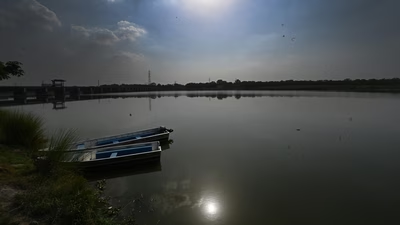
A proposed 52-km Yamuna riverfront development project in Delhi on the lines of Ahmedabad’s Sabarmati riverfront has drawn opposition from a coalition of environmentalists, former water ministry officials, researchers and citizen groups.
The objections come days after the Delhi government, on October 21, announced that it was initiating the process of signing a memorandum of understanding with the Sabarmati Riverfront Development Corporation Limited (SRFDCL) for the project. The proposed development will span 52 km in two phases – from Palla to Wazirabad in the first, and from Wazirabad to Kalindi Kunj in the second. The coalition also cited the National Green Tribunal’s January 2015 Mailey Se Nirmal Yamuna judgment, which rejected an earlier riverfront proposal by the Delhi Development Authority over concerns about flood-carrying capacity and floodplain protection.
The letter said that accumulated silt, encroachments, and infrastructure such as bridges, roads, and barrages had already reduced the river’s cross-sectional area, making it vulnerable to flooding at lower flows.
They have sought public disclosure of the project’s pre-feasibility report, detailed project report, cost estimates and environmental assessments. They have urged the government to prioritise restoring environmental flows, reducing pollution and completing scientific demarcation of the floodplain. “We urge the concerned Central Government Ministries and Government of Delhi to ensure that no project compromises the integrity of the Yamuna River, its floodplain and long-term flood security of the national capital. Public resources should be directed towards addressing the causes of the river’s degradation and flood risks, rather than undertaking large-scale riverfront development plans,” it adds.
The 18 signatories of a letter addressed to Union jal shakti minister CR Patil, Union environment minister Bhupender Yadav, Delhi lieutenant governor Taranjit Singh Sandhu and chief minister Rekha Gupta have urged the Centre and Delhi government to reconsider the plan, citing the Yamuna’s different ecological and hydrological characteristics and the potential to aggravate flood risks in the capital.
